

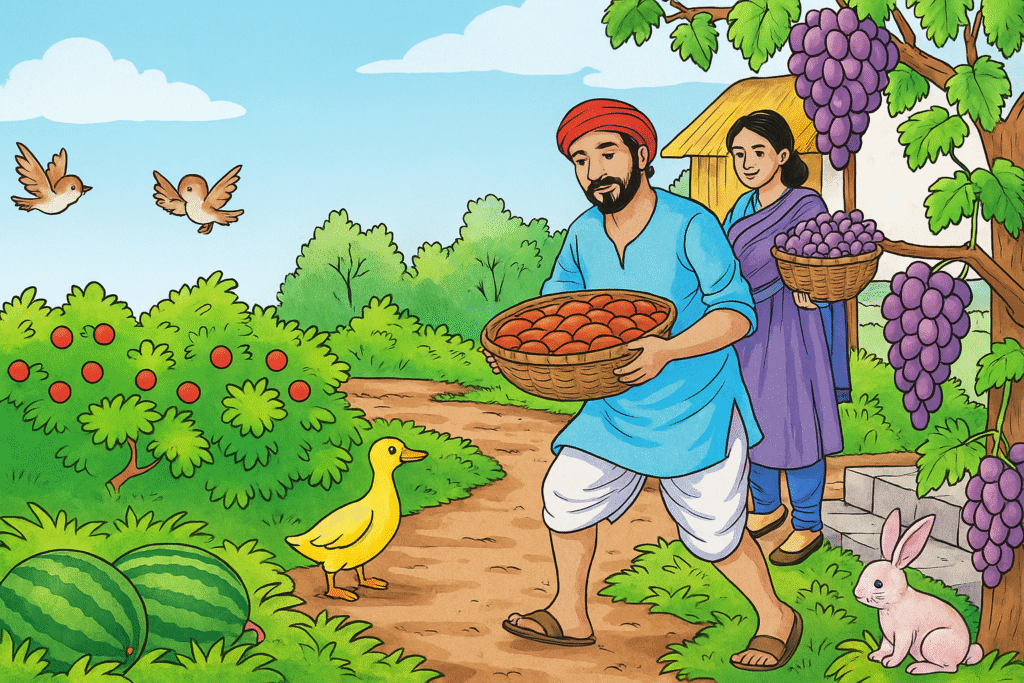
कहानी “Thank God!” एक समझदार किसान की है जो फलों से प्रेम करता था। उसने अपने खेत में मेहनत से अनेक फल उगाए, जिनमें तरबूज़ और अंगूर सबसे अच्छे थे। जब उसने राजा को उपहार देने का निश्चय किया, तो भारी तरबूज़ की जगह हल्के अंगूर ले गया। राजा ने मज़ाक में अंगूर किसान पर फेंके, पर किसान हर बार बोला, “Thank God!” जब राजा ने कारण पूछा, तो किसान ने कहा कि यदि उसने तरबूज़ लाए होते तो बहुत चोट लगती। यह कहानी हमें सिखाती है कि हर परिस्थिति में भगवान का धन्यवाद करना चाहिए, क्योंकि हर बात में कुछ अच्छा छिपा होता है।
Once upon a time, there was a farmer who liked fruits.
वन्स अपॉन अ टाइम, देयर वाज़ अ फार्मर हू लाइक्ड फ्रूट्स।
बहुत समय पहले एक किसान था जिसे फलों से प्यार था।
So, he decided to grow fruits on his land.
सो, ही डिसाइडेड टू ग्रो फ्रूट्स ऑन हिज लैंड।
इसलिए उसने अपनी जमीन पर फल उगाने का निर्णय लिया।
He worked hard to grow a variety of fruits.
ही वर्क्ड हार्ड टू ग्रो अ वराइटी ऑफ फ्रूट्स।
उसने विभिन्न प्रकार के फल उगाने के लिए कड़ी मेहनत की।
With hard work and care, the trees grew well.
विद हार्ड वर्क एंड केयर, द ट्रीज़ ग्रू वेल।
मेहनत और देखभाल से पेड़ अच्छे से बढ़े।
He took special care to grow grapes and watermelons in a small corner of his farm.
ही टुक स्पेशल केयर टू ग्रो ग्रेप्स एंड वॉटरमेलनज़ इन अ स्मॉल कॉर्नर ऑफ हिज फार्म।
उसने अपने खेत के एक छोटे कोने में अंगूर और तरबूज़ उगाने की विशेष देखभाल की।
When the fruits were all ripe and ready to be eaten, the farmer decided to gift the best fruit to the king.
व्हेन द फ्रूट्स वेर ऑल रायप एंड रेडी टू बी ईटन, द फार्मर डिसाइडेड टू गिफ्ट द बेस्ट फ्रूट टू द किंग।
जब फल पक कर खाने लायक हो गए, किसान ने निर्णय लिया कि वह राजा को सबसे अच्छा फल भेंट करेगा।
Then his wife said, “This year, the best fruits on our farm are the watermelons and the grapes.”
देन् हिज वाइफ सेड, “धिस ईयर, द बेस्ट फ्रूट्स ऑन आवर फार्म आर द वॉटरमेलनज़ एंड द ग्रेप्स.”
फिर उसकी पत्नी ने कहा, “इस वर्ष हमारे खेत के सबसे अच्छे फल तरबूज़ और अंगूर हैं।”
The farmer thought about it and said, “Since it is a long journey to the palace, I shall take the grapes as watermelons are too heavy.”
द फार्मर थॉट अबाउट इट एंड सेड, “साइन्स इट इज़ अ लॉन्ग जर्नी टू द पैलेस, आय शल टेक द ग्रेप्स ऐज़ वॉटरमेलन आर टू हेवी.”
किसान ने सोचा और कहा, “चूँकि महल तक लंबी यात्रा है, तरबूज़ बहुत भारी हैं — मैं अंगूर लूँगा।”
So, he put bunches of grapes in a basket and walked to the king’s palace.
सो, ही पुट बन्चेज ऑफ ग्रेप्स इन अ बास्केट एंड वॉक्ड टू द किंग्ज़ पैलेस।
तो उसने अंगूरों के गुच्छे टोकरा में रखे और राजा के पैलेस की ओर चल दिया।
The farmer reached the palace. He told the palace guard that he had brought a gift for the King.
द फार्मर रीच्ड द पैलेस। ही टोल्ड द पैलेस गार्ड दैट ही हैड ब्रॉट एन गिफ्ट फॉर द किंग।
किसान महल पहुँचा। उसने महल के पहरेदार को कहा कि वह राजा के लिए उपहार लेकर आया है।
The palace guard then took him to the royal garden.
द पैलेस गार्ड देन् टुक हिम टू द रोयल गार्डन।
महल का पहरेदार फिर उसे शाही बगीचे में ले गया।
The farmer saw the King playing with the princess. So, he quietly kept the basket full of grapes in front of him and sat down.
द फार्मर सॉ द किंग प्लेइंग विद द प्रिन्सेस। सो, ही क्वायटली केप्ट द बास्केट फुल ऑफ ग्रेप्स इन फ्रंट ऑफ हिम एंड सैट डाउन।
किसान ने राजा को राजकुमारी के साथ खेलते देखा। इसलिए उसने चुपचाप टोकरा अपने सामने रखा और बैठ गया।
When the King sat down to rest, the guard brought the basket of grapes to the King.
व्हेन द किंग सैट डाउन टू रेस्ट, द गार्ड ब्रॉट द बास्केट ऑफ ग्रेप्स टू द किंग।
जब राजा आराम करने के लिए बैठा, तो पहरेदार ने अंगूरों का टोकरा राजा के पास लाकर रखा।
The guard pointed to the farmer and told the King that the grapes were a gift from the farmer.
द गार्ड प्वाइंटिड टू द फार्मर एंड टोल्ड द किंग दैट द ग्रेप्स वेर अ गिफ्ट फ्रॉम द फार्मर।
पहरेदार ने किसान की तरफ इशारा किया और राजा से कहा कि अंगूर किसान की ओर से उपहार हैं।
The King saw the farmer. The King was still in a playful mood.
द किंग सॉ द फार्मर। द किंग वाज़ स्टिल इन अ प्लेफुल मूड।
राजा ने किसान को देखा। राजा अभी भी चंचल मनोदशा में था।
He took a bunch of grapes from the basket. He plucked out one grape and popped it into his mouth.
ही टुक अ बन्च ऑफ ग्रेप्स फ्रॉम द बास्केट। ही प्लक्ड आउट वन् ग्रेप एंड पॉप्ड इट इंटू हिज़ माउथ।
उसने टोकरे से अंगूर का एक गुच्छा उठाया। उसने एक अंगूर तोड़ा और मुँह में रख लिया।
Then he plucked another grape and threw it playfully at the farmer.
देन ही प्लक्ड अनदर ग्रेप एंड थ्रू इट प्लेफुली एट द फार्मर।
फिर उसने एक और अंगूर तोड़ा और मजाक में किसान पर फेंक दिया।
When the grape hit the farmer’s forehead, he said, “Thank God!”
व्हेन द ग्रेप हिट द फार्मर’ज़ फोरहेड, ही सेड, “थैंक गॉड!”
जब अंगूर किसान के माथे पर लगा, उसने कहा, “भगवान का धन्यवाद!”
The King was surprised! He threw a grape again.
द किंग वाज़ सरप्राइज़्ड! ही थ्रू अ ग्रेप अगेन।
राजा आश्चर्यचकित हुआ! उसने फिर एक अंगूर फेंका।
The farmer again said, “Thank God! I am blessed!”
द फार्मर अगेन सेड, “थैंक गॉड! आई ऍम ब्लेस्ड!”
किसान ने फिर कहा, “भगवान का धन्यवाद! मैं धन्य हूँ!”
The King asked the farmer, “Why are you thanking God when I am throwing grapes at you?”
द किंग आस्क्ड द फार्मर, “व्हाई आर यू थैंकिंग गॉड व्हेन आय ऍम थ्रोइंग ग्रेप्स æt यू?”
राजा ने किसान से पूछा, “जब मैं तुम्हारे ऊपर अंगूर फेंक रहा हूँ तो तुम भगवान का धन्यवाद क्यों कर रहे हो?”
The wise farmer replied with a smile, “O mighty King! I had grown the best grapes and watermelons on my farm.
द वाइज फार्मर रिप्लाइड विथ अ स्माइल, “ओ माइटी किंग! आई हैड ग्रोन द बेस्ट ग्रेप्स एंड वॉटरमेलनज़ ऑन माय फार्म।”
समझदार किसान मुस्कुरा कर बोला, “हे महान राजा! मैंने अपने खेत में सबसे अच्छे अंगूर और तरबूज़ उगाये थे।”
I chose the grapes to gift to you. Imagine if I had brought watermelons! Indeed, God is great!”
आई चोज्ड द ग्रेप्स टू गिफ्ट टू यू। इमाजिन इफ आई हैड ब्रॉट वॉटरमेलनज़! इनडीड, गॉड इज़ ग्रेट!”
मैंने आपको भेंट देने के लिए अंगूर चुने। सोचिए अगर मैंने तरबूज़ लाये होते! निश्चय ही, भगवान महान है!”
— A Jataka tale
— ए जताका टेल
— एक जताका कथा
New Words — Word | Pronunciation | हिन्दी अर्थ
| Word | Pronunciation | Meaning (हिन्दी) |
|---|---|---|
| farmer | फार्मर | किसान |
| fruit | फ्रूट | फल |
| watermelon | वॉटरमेलन | तरबूज़ |
| grape / grapes | ग्रेप / ग्रेप्स | अंगूर |
| basket | बास्केट | टोकरा |
| palace | पैलेस | महल |
| guard | गार्ड | पहरेदार |
| throne | थ्रोन | सिंहासन |
| princess | प्रिन्सेस | राजकुमारी |
| journey | जर्नी | यात्रा |
| heavy | हेवी | भारी |
| light | लाइट | हल्का |
| blessed | ब्लेस्ड | धन्य/आशीर्वादित |
| wise | वाइज | बुद्धिमान |
| popped | पॉप्ड | मुँह में रखा/फोड़ा |
| playful | प्लेफुल | चंचल, शरारती |
| surprised | सरप्राइज़्ड | आश्चर्यचकित |
| imagine | इमैजिन | कल्पना करो |
| gift | गिफ्ट | उपहार |
| bunch | बन्च | गुच्छा |
| front | फ्रंट | सामने |
| kept | केप्ट | रखा |
| popped | पॉप्ड | फोड़कर रखा / मुँह में डाला |
| bless | ब्लेस | आशीर्वाद देना |
| thank | थैंक | धन्यवाद |
| God | गॉड | ईश्वर |
(25+ useful words from the chapter; use these for pronunciation practice.)
Moral of the Story (English)
Be thankful for small blessings; sometimes what looks like trouble may be a blessing in disguise.
कहानी की शिक्षा (हिन्दी)
छोटी-छोटी खुशियों के लिए आभारी रहो; कभी-कभी जो कठिनाई लगती है वही हमें बड़े नुकसान से बचा सकती है।
Q1. What did the farmer grow on his farm?
व्हाट डिड द फार्मर ग्रो ऑन हिज फार्म?
वह अपने खेत में फल उगाता था।
Answer: He grew fruits, especially watermelons and grapes.
ही ग्रू फ़्रूट्स, एस्पेशली वॉटरमेलनज़ एंड ग्रेप्स।
हिन्दी: उसने फल उगाये, विशेषकर तरबूज़ और अंगूर।
Q2. What did his wife say?
व्हाट डिड हिज वाइफ से?
उसकी पत्नी ने कहा कि इस साल हमारे सबसे अच्छे फल तरबूज़ और अंगूर हैं।
Answer: She said the best fruits on their farm were watermelons and grapes.
शी सेड द बेस्ट फ्रूट्स ऑन देयर फार्म वेर वॉटरमेलनज़ एंड ग्रेप्स।
हिन्दी: उसने कहा कि उनके खेत के सबसे अच्छे फल तरबूज़ और अंगूर हैं।
Q3. Why did the farmer decide to take the grapes?
वाइ डिड द फार्मर डिसाइड टू टेक द ग्रेप्स?
किसान ने अंगूर इसलिए चुने क्योंकि महल दूर था और तरबूज़ भारी होते।
Answer: Because watermelons were too heavy to carry a long way, so he took grapes.
बीकॉज़ वॉटरमेलनज़ वेर टू हेवी; सो ही टुक ग्रेप्स।
हिन्दी: क्योंकि तरबूज़ बहुत भारी थे, इसलिए उसने अंगूर लिए।
Q4. What did the King do playfully?
व्हाट डिड द किंग डू प्लेफुली?
राजा ने मजाक में अंगूर पकड़ा, एक खाया और एक किसान पर फेंका।
Answer: He plucked grapes, ate one and threw another playfully at the farmer.
ही प्लक्ड ग्रेप्स, एट वन्, एंड थ्रू अनदर प्लेफुली एट द फार्मर।
हिन्दी: उसने एक अंगूर खाया और एक मजाक में किसान पर फेंका।
Q5. Why did the farmer say “Thank God!”?
वाइ डिड द फार्मर से “थैंक गॉड”?
किसान खुश था कि राजा ने तरबूज़ न फेंककर सिर्फ अंगूर फेंके — अगर तरबूज़ गिरते तो नुकसान होता।
Answer: He thanked God because he was glad the King threw small grapes and not heavy watermelons.
ही थैंक्ड गॉड बेकॉज़ ही वाज़ ग्लैड दैट द किंग थ्रौ स्मॉल ग्रेप्स नॉट हेवी वॉटरमेलनज़।
हिन्दी: उसने भगवान का धन्यवाद किया क्योंकि राजा ने छोटे अंगूर फेंके, भारी तरबूज़ नहीं।
B. Think and say (Suggested answers)
- What else can a farmer grow?
A farmer can grow vegetables (potatoes, tomatoes), grains (wheat, rice), pulses, flowers, etc. (सब्जियाँ, अनाज, दालें, फूल इत्यादि)
- Are there women farmers? Do you know any?
Yes. Many women work as farmers. (Teacher can ask students to name local women farmers they know.)
- If you meet a farmer, what would you say to them?
Students can say: “Thank you for your hard work!” or “Your crops are wonderful.” (“आपके मेहनत के लिए धन्यवाद!” या “आपकी फसल बहुत अच्छी है।”)
Word Power — Opposites (Page 83)
| Word | Opposite | Pronunciation (इंग) | हिन्दी अर्थ |
|---|---|---|---|
| thick | thin | थिक — थिन | मोटा — पतला |
| long | short | लॉन्ग — शॉर्ट | लम्बा — छोटा |
| soft | hard | सॉफ्ट — हार्ड | नरम — कठोर |
| slow | fast | स्लो — फास्ट | धीमा — तेज़ |
(Use these pairs for Word Power practice.)
Extra Word Power — Matching / Make Sentences
Match & Make: thick — thin; long — short; soft — hard; slow — fast.
मेच एंड मेक — थिक — थिन; लॉन्ग — शॉर्ट; सॉफ्ट — हार्ड; स्लो — फास्ट।
उदाहरण वाक्य: The thick book is heavy. The thin book is light. (मोटी किताब भारी है। पतली किताब हल्की है।)
Fill in the blanks with ‘is’ or ‘are’ (Page 84)
| Sentence | Answer | Pronunciation | हिन्दी अर्थ |
|---|---|---|---|
| There ______ animals in the jungle. | are | देयर आर एनिमल्स इन द जंगल। | जंगल में जानवर हैं। |
| The table ______ made of wood. | is | द टेबल इज़ मेड ऑफ वुड। | मेज़ लकड़ी का बना है। |
| These mangoes ______ sweet. | are | दीज़ मैंगोज़ आर स्वीट। | ये आम मीठे हैं। |
| Raghuram ______ a tall boy. | is | रघुराम इज़ अ टॉल बॉय। | रघुराम एक लंबा लड़का है। |
| The toys ______ on the shelf. | are | द टॉयज़ आर ऑन द शेल्फ। | खिलौने अलमारी पर हैं। |
| The book ______ on the table. | is | द बुक इज़ ऑन द टेबल। | किताब मेज़ पर है। |
| The girls ______ at the shop. | are | द गर्ल्स आर एट द शॉप। | लड़कियाँ दुकान पर हैं। |
| The car ______ on the road. | is | द कार इज़ ऑन द रोड। | कार सड़क पर है। |
Classification & Practice
Singular or Plural? (Practice):
One apple — singular (is). Two apples — plural (are).
एक सेब — एकवचन (is). दो सेब — बहुवचन (are).
Poem: “Aachoo!” (Page 85)
Once a mighty elephant,
वन्स अ माइटी एलिफैंट,
एक शक्तिशाली हाथी,
Got a mighty cold.
गॉट अ माइटी कोल्ड।
कोई तेज़ सर्दी हो गई।
It went to buy a handkerchief, Where handkerchiefs were sold.
इट वेंट टू बाय अ हैंडकरचीफ, व्हेयर हैंडकरचीफ्स वेर सोल्ड।
वो रुमाल खरीदने गया, जहाँ रुमाल बेचे जाते थे।
“A hanky for an elephant?” The sales girl was surprised, “Sorry sir but we don’t have a handkerchief that size.”
“अ हैंकी फॉर अन एलिफैंट?” द सेल्स गर्ल वाज़ सरप्राइज़्ड, “सॉरी सर बट वी डोंट हैव अ हैंडकरचीफ दैट साईज़.”
“हाथी के लिए रुमाल?” दुकानदारती हैरान हुई, “माफ़ कीजिए लेकिन हमारे पास इतना बड़ा रुमाल नहीं है।”
“AACHOO!” said the elephant. And shook its mighty head, “Forget about the handkerchief — Give me a sheet instead.”
“आछू!” सेड द एलिफैंट। एंड शुक इट्स माइटी हेड, “फॉरगेट अबाउट द हैंडकरचीफ — गिव मी अ शीट इंस्टेड.”
“आछू!” हाथी ने कहा और अपना बड़ा सिर हिलाया, “रुमाल भुला दें — मुझे इसकी बजाय एक चादर दे दें।”
(Poem meaning: Elephant is so big that a handkerchief is too small; he needs a sheet.)
Imagination — Let us Speak (Page 86)
Question: Imagine you are visiting the big elephant. You know that the elephant has a cold. What food items will you take with you?
इमैजिन यू आर विजिटिंग द बिग एलिफैंट। यू नो दैट द एलिफैंट हैज़ अ कोल्ड। व्हाट फूड आइटम्स विल यू टेक विद यू?
मैं हाथी के लिए गरम सूप, केले, संतरे और शहद ले जाऊँगा/ले जाऊँगी।
Chandu’s Fruit Salad — Steps (Page 86) — Correct order
- Mother cuts some fruits for me.
- First I take some banana slices.
- Next I put in papaya cubes.
- Then I add the apple slices.
- After that I add some grapes from a bunch.
- Then I mix them all.
- Finally, I squeeze a lemon on it, adding a pinch of salt.
मदर कट्स सम फ्रूट्स फॉर मी … (ऊपर क्रम को पढ़ें)
(हिन्दी सार): माँ फल काटकर देती हैं → केले, पपीता, सेब, अंगूर डालें → सभी मिलाएँ → नींबू-नमक डालें।
Word Search — Grid Solution (Page 87)
Words to find: MANGO, PAPAYA, GRAPES, BANANA, GUAVA, PLUM, PEACH, PEAR
| Fruit | Pronunciation | Meaning | Grid location hint |
|---|---|---|---|
| MANGO | मैंगो | आम | Top row — right to left (letters form MANGO) |
| PAPAYA | पपाया | पपीता | Second row — left to right (PAPAYA) |
| GRAPES | ग्रेप्स | अंगूर | Fourth row — left to right (AGRAPES…) |
| BANANA | बनाना | केला | Sixth row — left to right (BANANA) |
| GUAVA | ग्वावा | अमरूद | Fifth row — left to right (GUAVA letters appear) |
| PLUM | प्लम | आलूबुखारा | Bottom row — left to right (PLUM) |
| PEACH | पीच | आड़ू | Seventh row — middle letters form PEACH |
| PEAR | पियर | नाशपाती | Rightmost column — top to bottom (PEAR) |
(Hint: students should circle words in grid horizontally or vertically; diagonals if present.)