
Lesson 2 – The Tinkling Bells

📘 Class 4 • 📚 English • 🏫 NCERT

Lesson Overview

“The Tinkling Bells” एक प्रेरणादायक कहानी है जो चिन्ना नाम के एक बालक और उसकी प्यारी पालतू बकरी तारा के इर्द-गिर्द घूमती है। इस पाठ के माध्यम से बच्चों को ईमानदारी, जिम्मेदारी, दयालुता और सही निर्णय लेने जैसे महत्वपूर्ण जीवन-मूल्यों की सीख मिलती है। कहानी में चिन्ना को गलती से मिले अतिरिक्त पैसे लौटाने का अवसर मिलता है, जिससे वह यह समझता है कि सच्चाई और ईमानदारी हमेशा सम्मान, विश्वास और खुशी दिलाती है। यह पाठ विद्यार्थियों के पढ़ने, समझने, बोलने तथा शब्दावली कौशल का विकास करने के साथ-साथ उनमें अच्छे संस्कार और नैतिक मूल्यों को भी मजबूत बनाता है।
📚 Explore This Lesson

नीचे दिए गए सेक्शनों पर क्लिक करके पाठ को पढ़ें, शब्दार्थ जानें, प्रश्नोत्तर देखें और वर्कबुक अभ्यास पूरा करें।

📖 Let us Read

Chinna was a little boy who lived in a village.
चिन्ना वॉज़ अ लिटल बॉय हू लिव्ड इन अ विलेज।
चिन्ना एक छोटा लड़का था जो एक गाँव में रहता था।
He studied in grade 4.
ही स्टडीड इन ग्रेड फोर।
वह कक्षा 4 में पढ़ता था।
He was a bright boy who liked to read storybooks and learn new things.
ही वॉज़ अ ब्राइट बॉय हू लाइक्ड टू रीड स्टोरीबुक्स एंड लर्न न्यू थिंग्स।
वह एक होशियार लड़का था जिसे कहानी की किताबें पढ़ना और नई बातें सीखना पसंद था।
He had many friends with whom he played.
ही हैड मेनी फ्रेंड्स विद हूम ही प्लेड।
उसके बहुत से मित्र थे जिनके साथ वह खेलता था।
But, most of all, he loved to play with his little pet “kid” named Tara.
बट, मोस्ट ऑफ ऑल, ही लव्ड टू प्ले विद हिज लिटल पेट “किड” नेम्ड तारा।
लेकिन सबसे अधिक वह अपने छोटे पालतू बकरी के बच्चे “तारा” के साथ खेलना पसंद करता था।
Tara was a five-month-old kid, milky white in colour.
तारा वॉज़ अ फाइव मंथ ओल्ड किड, मिल्की व्हाइट इन कलर।
तारा पाँच महीने की बकरी का बच्चा था, जिसका रंग दूध जैसा सफेद था।
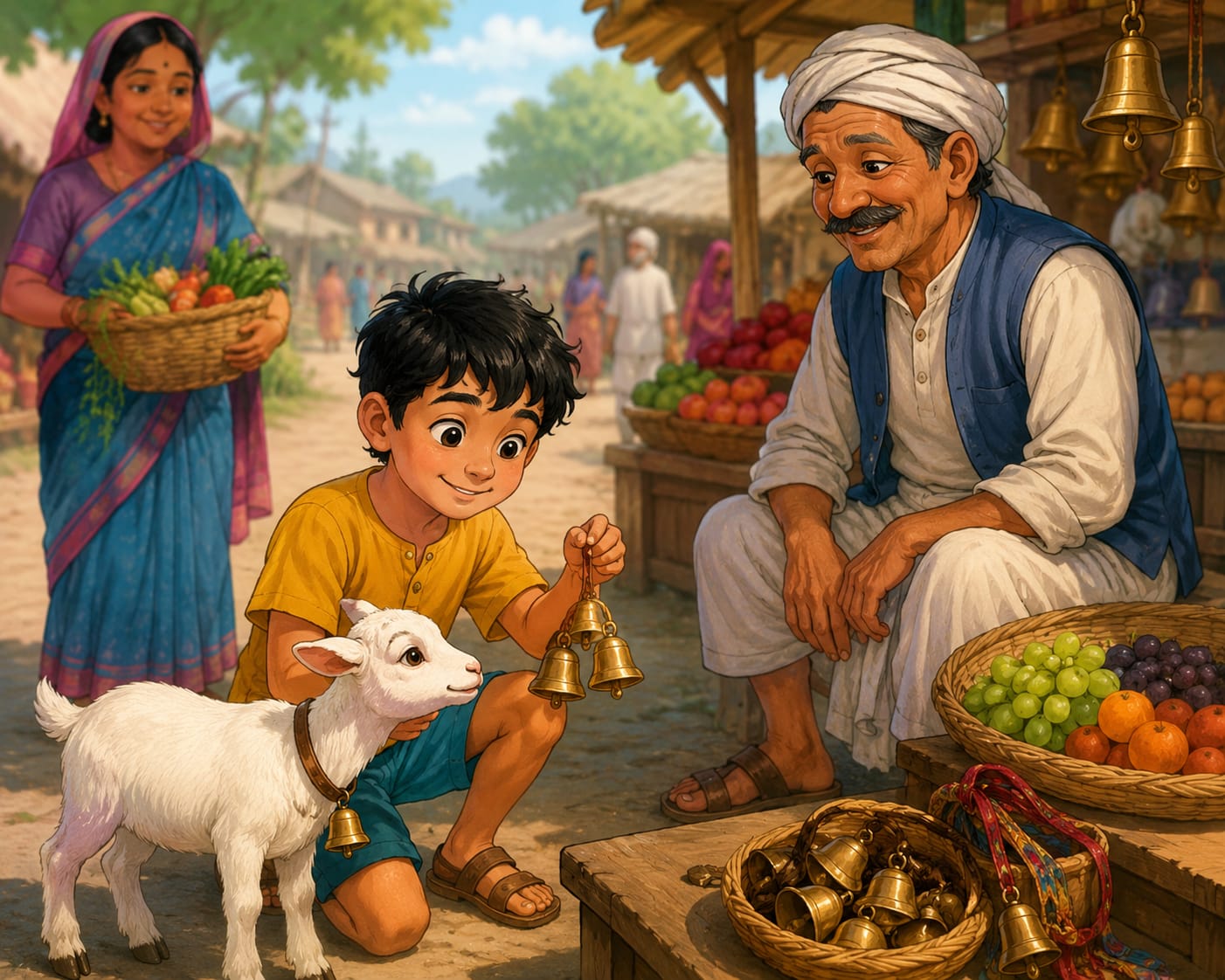
One day, while coming back from school, Chinna stopped at Chacha’s shop.
वन डे, व्हाइल कमिंग बैक फ्रॉम स्कूल, चिन्ना स्टॉप्ड एट चाचाज़ शॉप।
एक दिन स्कूल से लौटते समय चिन्ना चाचा की दुकान पर रुका।
He saw a pair of beautiful, shiny tinkling bells.
ही सॉ अ पेयर ऑफ ब्यूटीफुल, शाइनी टिंकलिंग बेल्स।
उसने सुंदर और चमकदार छनछनाती घंटियों की एक जोड़ी देखी।
He went inside the shop and politely asked the shopkeeper to show him the tinkling bells.
ही वेंट इनसाइड द शॉप एंड पॉलाइटली आस्क्ड द शॉपकीपर टू शो हिम द टिंकलिंग बेल्स।
वह दुकान के अंदर गया और विनम्रता से दुकानदार से घंटियाँ दिखाने को कहा।
“Ten rupees please,” Chacha said.
टेन रुपीज प्लीज़, चाचा सेड।
“दस रुपये दीजिए,” चाचा ने कहा।
Chinna liked the bells a lot.
चिन्ना लाइक्ड द बेल्स अ लॉट।
चिन्ना को वे घंटियाँ बहुत पसंद आईं।
He put his hand in his pocket to take out the money.
ही पुट हिज हैंड इन हिज पॉकेट टू टेक आउट द मनी।
उसने पैसे निकालने के लिए अपनी जेब में हाथ डाला।
He was shocked to find that his money was missing.
ही वॉज़ शॉक्ड टू फाइंड दैट हिज मनी वॉज़ मिसिंग।
यह देखकर वह चौंक गया कि उसके पैसे गायब थे।
“Oh! Where is the money Dadaji gave me yesterday?”
ओह! व्हेयर इज़ द मनी दादाजी गेव मी येस्टरडे?
“अरे! दादाजी ने जो पैसे मुझे कल दिए थे, वे कहाँ हैं?”
He searched all his pockets but couldn’t find the money.
ही सर्च्ड ऑल हिज पॉकेट्स बट कुडन्ट फाइंड द मनी।
उसने अपनी सभी जेबें टटोलीं लेकिन पैसे नहीं मिले।
Feeling sad, he returned the tinkling bells to Chacha and began walking home.
फीलिंग सैड, ही रिटर्न्ड द टिंकलिंग बेल्स टू चाचा एंड बिगैन वॉकिंग होम।
दुखी होकर उसने घंटियाँ वापस कर दीं और घर की ओर चल पड़ा।
Chinna reached home.
चिन्ना रीच्ड होम।
चिन्ना घर पहुँच गया।
He removed his shoes and placed them in the corner.
ही रिमूव्ड हिज शूज़ एंड प्लेस्ट देम इन द कॉर्नर।
उसने अपने जूते उतारकर कोने में रख दिए।
He went inside and dropped his school bag on the study table.
ही वेंट इनसाइड एंड ड्रॉप्ड हिज स्कूल बैग ऑन द स्टडी टेबल।
वह अंदर गया और अपना स्कूल बैग पढ़ाई की मेज़ पर रख दिया।
He sat on the chair and rested his head on the table.
ही सैट ऑन द चेयर एंड रेस्टेड हिज हेड ऑन द टेबल।
वह कुर्सी पर बैठ गया और अपना सिर मेज़ पर टिका दिया।
His mother Kamala, who had been watching all this, came to Chinna.
हिज मदर कमला, हू हैड बीन वॉचिंग ऑल दिस, केम टू चिन्ना।
उसकी माँ कमला, जो यह सब देख रही थीं, चिन्ना के पास आईं।
She asked gently, “What happened, Chinna?”
शी आस्क्ड जेंटली, “व्हाट हैपन्ड, चिन्ना?”
उन्होंने प्यार से पूछा, “क्या हुआ, चिन्ना?”
Kamala laid her hands softly on his shoulders.
कमला लेड हर हैंड्स सॉफ्टली ऑन हिज शोल्डर्स।
कमला ने धीरे से अपने हाथ उसके कंधों पर रखे।
At once, Chinna hugged her and started crying.
एट वन्स, चिन्ना हग्ड हर एंड स्टार्टेड क्राइंग।
तुरंत चिन्ना उनसे लिपट गया और रोने लगा।
On seeing this, Kamala wiped his tears.
ऑन सीइंग दिस, कमला वाइप्ड हिज टियर्स।
यह देखकर कमला ने उसके आँसू पोंछे।
After a while, Chinna told her about the missing money.
आफ्टर अ व्हाइल, चिन्ना टोल्ड हर अबाउट द मिसिंग मनी।
कुछ देर बाद चिन्ना ने उन्हें खोए हुए पैसों के बारे में बताया।
Kamala consoled him, saying, “I’m so sorry, dear. It’s ok, don’t cry. I’ll give you money to buy the bells. But, make sure to be careful with money in the future”.
कमला कन्सोल्ड हिम, सेइंग, “आइ एम सो सॉरी, डियर। इट्स ओके, डोंट क्राइ। आइ विल गिव यू मनी टू बाय द बेल्स। बट, मेक श्योर टू बी केयरफुल विद मनी इन द फ्यूचर।”
कमला ने उसे समझाते हुए कहा, “मुझे बहुत दुख है, बेटा। कोई बात नहीं, मत रोओ। मैं तुम्हें घंटियाँ खरीदने के लिए पैसे दूँगी। लेकिन आगे से पैसों का ध्यान रखना।”
Chinna smiled and said, “Sure Amma”.
चिन्ना स्माइल्ड एंड सेड, “श्योर अम्मा।”
चिन्ना मुस्कुराया और बोला, “ज़रूर अम्मा।”
“That’s my boy! Cheer up! Now, let’s go to the market to buy some fruits and vegetables,” Kamala said warmly.
“दैट्स माय बॉय! चियर अप! नाउ, लेट्स गो टू द मार्केट टू बाय सम फ्रूट्स एंड वेजिटेबल्स,” कमला सेड वॉर्मली।
“यही तो मेरा बेटा है! खुश हो जाओ! अब चलो, कुछ फल और सब्जियाँ खरीदने बाजार चलते हैं,” कमला ने स्नेहपूर्वक कहा।
Kamala and Chinna went to the market.
कमला एंड चिन्ना वेंट टू द मार्केट।
कमला और चिन्ना बाजार गए।
They bought apples, mangoes, tomatoes and brinjals.
दे बॉट एपल्स, मैंगोज़, टोमेटोज़ एंड ब्रिंजल्स।
उन्होंने सेब, आम, टमाटर और बैंगन खरीदे।
Chinna also wanted pineapples.
चिन्ना ऑल्सो वॉन्टेड पाइनएप्पल्स।
चिन्ना को अनानास भी चाहिए थे।
So, they stopped at the pineapple stall.
सो, दे स्टॉप्ड एट द पाइनएप्पल स्टॉल।
इसलिए वे अनानास की दुकान पर रुके।
“What is the cost of the pineapples?” Kamala asked.
“व्हाट इज़ द कॉस्ट ऑफ द पाइनएप्पल्स?” कमला आस्क्ड।
“अनानास की कीमत क्या है?” कमला ने पूछा।
“Forty-five rupees each,” replied the fruit seller.
“फॉर्टी-फाइव रुपीज़ ईच,” रिप्लाइड द फ्रूट सेलर।
“पैंतालीस रुपये प्रति अनानास,” फल विक्रेता ने उत्तर दिया।
Kamala bought two pineapples and gave him a hundred-rupee note.
कमला बॉट टू पाइनएप्पल्स एंड गेव हिम अ हंड्रेड-रुपी नोट।
कमला ने दो अनानास खरीदे और उसे सौ रुपये का नोट दिया।
She asked Chinna to take the change.
शी आस्क्ड चिन्ना टू टेक द चेंज।
उन्होंने चिन्ना से बाकी पैसे लेने को कहा।
Then, she went to other shops to buy some more fruits.
देन, शी वेंट टू अदर शॉप्स टू बाय सम मोर फ्रूट्स।
फिर वह कुछ और फल खरीदने दूसरी दुकानों पर चली गईं।
The fruit seller gave Chinna two ten-rupee notes.
द फ्रूट सेलर गेव चिन्ना टू टेन-रुपी नोट्स।
फल विक्रेता ने चिन्ना को दस-दस रुपये के दो नोट दिए।
Hiding a mischievous smile, Chinna ran to his mother.
हाइडिंग अ मिसचीवियस स्माइल, चिन्ना रैन टू हिज मदर।
शरारती मुस्कान छिपाते हुए चिन्ना अपनी माँ के पास दौड़ा।
“Amma, do you know? The fruit seller gave me ten rupees extra by mistake. Can I buy the bells and some chocolates?” whispered Chinna.
“अम्मा, डू यू नो? द फ्रूट सेलर गेव मी टेन रुपीज एक्स्ट्रा बाय मिस्टेक। कैन आइ बाय द बेल्स एंड सम चॉकलेट्स?” व्हिस्पर्ड चिन्ना।
“अम्मा, क्या आप जानती हैं? फल वाले ने मुझे गलती से दस रुपये ज्यादा दे दिए। क्या मैं उनसे घंटियाँ और कुछ चॉकलेट खरीद सकता हूँ?” चिन्ना ने धीरे से कहा।
“Chinna, that’s very bad. It is stealing. How did you feel when you found your money missing?” asked Kamala.
“चिन्ना, दैट्स वेरी बैड। इट इज़ स्टीलिंग। हाउ डिड यू फील व्हेन यू फाउंड योर मनी मिसिंग?” आस्क्ड कमला।
“चिन्ना, यह बहुत गलत है। यह चोरी है। जब तुम्हारे पैसे खो गए थे तब तुम्हें कैसा लगा था?” कमला ने पूछा।
“I felt very sad and angry!” replied Chinna.
“आइ फेल्ट वेरी सैड एंड एंग्री!” रिप्लाइड चिन्ना।
“मुझे बहुत दुख और गुस्सा आया था!” चिन्ना ने उत्तर दिया।
“The fruit seller will also feel the same when he comes to know the mistake. Now, be a good boy,” said Kamala gently.
“द फ्रूट सेलर विल ऑल्सो फील द सेम व्हेन ही कम्स टू नो द मिस्टेक। नाउ, बी अ गुड बॉय,” सेड कमला जेंटली।
“जब फल विक्रेता को अपनी गलती का पता चलेगा, तो उसे भी ऐसा ही लगेगा। अब अच्छे बच्चे बनो,” कमला ने प्यार से कहा।
Chinna looked at his mother thoughtfully.
चिन्ना लुक्ड एट हिज मदर थॉटफुली।
चिन्ना ने सोचते हुए अपनी माँ की ओर देखा।
He ran back to the fruit seller to return the extra money.
ही रैन बैक टू द फ्रूट सेलर टू रिटर्न द एक्स्ट्रा मनी।
वह अतिरिक्त पैसे लौटाने के लिए फल विक्रेता के पास वापस दौड़ा।
The fruit seller was very happy.
द फ्रूट सेलर वॉज़ वेरी हैप्पी।
फल विक्रेता बहुत खुश हुआ।
“You are an honest boy,” he praised him.
“यू आर एन ऑनेस्ट बॉय,” ही प्रेज्ड हिम।
“तुम एक ईमानदार लड़के हो,” उसने उसकी प्रशंसा की।
Chinna ran back to his mother.
चिन्ना रैन बैक टू हिज मदर।
चिन्ना वापस अपनी माँ के पास गया।
Kamala felt pleased with Chinna’s honesty and took him to Chacha’s shop to buy the tinkling bells.
कमला फेल्ट प्लीज़्ड विद चिन्नाज़ ऑनेस्टी एंड टुक हिम टू चाचाज़ शॉप टू बाय द टिंकलिंग बेल्स।
कमला चिन्ना की ईमानदारी से प्रसन्न हुईं और उसे घंटियाँ खरीदने के लिए चाचा की दुकान पर ले गईं।
Chacha was about to close his shop.
चाचा वॉज़ अबाउट टू क्लोज हिज शॉप।
चाचा अपनी दुकान बंद करने वाले थे।
‘Wait!’ called Chinna.
‘वेट!’ कॉल्ड चिन्ना।
“रुकिए!” चिन्ना ने पुकारा।
‘Do you still have the bells?’
‘डू यू स्टिल हैव द बेल्स?’
“क्या आपके पास अभी भी वे घंटियाँ हैं?”
‘Yes, I do’ said Chacha.
‘येस, आइ डू’ सेड चाचा।
“हाँ, हैं,” चाचा ने कहा।
Chinna paid him ten rupees and they both happily walked home.
चिन्ना पेड हिम टेन रुपीज एंड दे बोथ हैप्पिली वॉक्ड होम।
चिन्ना ने उन्हें दस रुपये दिए और दोनों खुशी-खुशी घर चले गए।
The bells were tinkling in Chinna’s pocket.
द बेल्स वर टिंकलिंग इन चिन्नाज़ पॉकेट।
घंटियाँ चिन्ना की जेब में छनछना रही थीं।
Hearing the sound of bells, Chinna’s pet kid Tara came running out.
हियरिंग द साउंड ऑफ बेल्स, चिन्नाज़ पेट किड तारा केम रनिंग आउट।
घंटियों की आवाज़ सुनकर चिन्ना की पालतू बकरी का बच्चा तारा दौड़ता हुआ बाहर आया।
Chinna happily tied the tinkling bells around Tara’s neck.
चिन्ना हैप्पिली टाइड द टिंकलिंग बेल्स अराउंड ताराज़ नेक।
चिन्ना ने खुशी-खुशी छनछनाती घंटियाँ तारा के गले में बाँध दीं।
Do You Know?

A baby goat is called a ‘kid’, just like a young child! So, when someone says, ‘Look at that kid playing in the field’, they might not be talking about a human – they could mean a baby goat!

क्या आप जानते हैं?

बकरी के बच्चे को भी ‘Kid’ कहा जाता है, ठीक वैसे ही जैसे छोटे बच्चे को कहा जाता है। इसलिए जब कोई कहे, “मैदान में उस kid को खेलते हुए देखो”, तो हो सकता है कि वह किसी बच्चे की नहीं बल्कि बकरी के बच्चे की बात कर रहा हो।

🌟 Moral

Honesty is the best policy. We should always return things that do not belong to us and make the right choice even when nobody is watching. Being honest earns trust, respect, and happiness.

ईमानदारी सबसे अच्छी नीति है। हमें हमेशा ऐसी वस्तुएँ या पैसे लौटा देने चाहिए जो हमारे नहीं हैं और सही निर्णय लेना चाहिए, चाहे कोई हमें देख रहा हो या नहीं। ईमानदारी से हमें विश्वास, सम्मान और खुशी मिलती है।

📝 Word Meaning

Word Pronunciation Meaning
Village विलेज गाँव
Bright ब्राइट होशियार
Storybook स्टोरीबुक कहानी की पुस्तक
Pet पेट पालतू जानवर
Kid किड बकरी का बच्चा
Milky White मिल्की व्हाइट दूध जैसा सफेद
Shiny शाइनी चमकदार
Tinkling टिंकलिंग छनछनाने वाली
Politely पॉलाइटली विनम्रता से
Shopkeeper शॉपकीपर दुकानदार
Shocked शॉक्ड हैरान
Missing मिसिंग गायब
Searched सर्च्ड खोजा
Corner कॉर्नर कोना
Gently जेंटली धीरे से
Shoulders शोल्डर्स कंधे
Hugged हग्ड गले लगाया
Crying क्राइंग रोना
Tears टियर्स आँसू
Consoled कन्सोल्ड सांत्वना दी
Careful केयरफुल सावधान
Market मार्केट बाज़ार
Pineapple पाइनएप्पल अनानास
Mischievous मिसचीवियस शरारती
Whispered व्हिस्पर्ड फुसफुसाकर कहा
Stealing स्टीलिंग चोरी करना
Thoughtfully थॉटफुली सोच-विचार करके
Honest ऑनेस्ट ईमानदार
Praised प्रेज्ड प्रशंसा की
Pleased प्लीज़्ड प्रसन्न
Happily हैप्पिली खुशी-खुशी
Neck नेक गला

📋 Textbook Solution

A. Answer the following.
निम्नलिखित प्रश्नों के उत्तर दीजिए।
1. Why was Chinna upset?
व्हाई वॉज़ चिन्ना अपसेट?
चिन्ना परेशान क्यों था?

Chinna was upset because the money given by his Dadaji was missing from his pocket.
चिन्ना वॉज़ अपसेट बिकॉज़ द मनी गिवन बाय हिज दादाजी वॉज़ मिसिंग फ्रॉम हिज पॉकेट।
चिन्ना परेशान था क्योंकि दादाजी द्वारा दिए गए पैसे उसकी जेब से गायब हो गए थे।
2. How did Kamala help Chinna feel better?
हाउ डिड कमला हेल्प चिन्ना फील बेटर?
कमला ने चिन्ना को अच्छा महसूस कराने में कैसे मदद की?

Kamala comforted Chinna, wiped his tears and promised to give him money to buy the bells.
कमला कम्फर्टेड चिन्ना, वाइप्ड हिज टियर्स एंड प्रॉमिस्ड टू गिव हिम मनी टू बाय द बेल्स।
कमला ने चिन्ना को सांत्वना दी, उसके आँसू पोंछे और घंटियाँ खरीदने के लिए पैसे देने का वादा किया।
3. What did the fruit seller do by mistake?
व्हाट डिड द फ्रूट सेलर डू बाय मिस्टेक?
फल विक्रेता ने गलती से क्या किया?

The fruit seller gave Chinna ten rupees extra while returning the change.
द फ्रूट सेलर गेव चिन्ना टेन रुपीज एक्स्ट्रा व्हाइल रिटर्निंग द चेंज।
फल विक्रेता ने बाकी पैसे लौटाते समय चिन्ना को दस रुपये अधिक दे दिए।
4. How did Chinna manage to buy the bells from Chacha in the end?
हाउ डिड चिन्ना मैनेज टू बाय द बेल्स फ्रॉम चाचा इन द एंड?
अंत में चिन्ना ने चाचा से घंटियाँ कैसे खरीदीं?

After returning the extra money, Chinna’s honesty pleased Kamala. She took him to Chacha’s shop and gave him money to buy the bells.
आफ्टर रिटर्निंग द एक्स्ट्रा मनी, चिन्नाज़ ऑनेस्टी प्लीज़्ड कमला। शी टुक हिम टू चाचाज़ शॉप एंड गेव हिम मनी टू बाय द बेल्स।
अतिरिक्त पैसे लौटाने के बाद चिन्ना की ईमानदारी से कमला प्रसन्न हुईं। वे उसे चाचा की दुकान पर ले गईं और घंटियाँ खरीदने के लिए पैसे दिए।
B. Write ‘T’ for true or ‘F’ for false.
सही कथन के लिए T तथा गलत कथन के लिए F लिखिए।
1. Chinna wanted to buy the bells to attach them to his bicycle.

F (False)
2. Chinna’s mother, Kamala, comforted him when he came home feeling sad.

T (True)
3. The fruit seller gave Chinna twenty rupees extra as change.

F (False)
4. Chinna decided to keep the extra money and bought chocolates with it.

F (False)
5. The fruit seller was unhappy when Chinna returned the extra money.

F (False)
C. Think and discuss.
सोचिए और चर्चा कीजिए।
1. Why do you think Chinna decided to return the money instead of keeping it?
व्हाई डू यू थिंक चिन्ना डिसाइडेड टू रिटर्न द मनी इंस्टेड ऑफ कीपिंग इट?
आपके अनुसार चिन्ना ने पैसे रखने के बजाय उन्हें वापस लौटाने का निर्णय क्यों लिया?

Chinna decided to return the money because he understood that keeping someone else’s money was wrong. He wanted to be honest and do the right thing.
चिन्ना डिसाइडेड टू रिटर्न द मनी बिकॉज़ ही अंडरस्टुड दैट कीपिंग समवन एल्स मनी वॉज़ रॉन्ग। ही वॉन्टेड टू बी ऑनेस्ट एंड डू द राइट थिंग।
चिन्ना ने पैसे लौटाने का निर्णय लिया क्योंकि वह समझ गया था कि किसी और के पैसे रखना गलत है। वह ईमानदार बनना चाहता था और सही काम करना चाहता था।
2. Think of a time when you found something that didn’t belong to you. What did you do? How did it make you feel?
थिंक ऑफ अ टाइम व्हेन यू फाउंड समथिंग दैट डिडन्ट बिलॉन्ग टू यू। व्हाट डिड यू डू? हाउ डिड इट मेक यू फील?
ऐसी घटना के बारे में सोचिए जब आपको कोई ऐसी वस्तु मिली हो जो आपकी नहीं थी। आपने क्या किया? आपको कैसा महसूस हुआ?

I returned the item to its owner. It made me feel happy, honest and proud because I did the right thing.
आइ रिटर्न्ड द आइटम टू इट्स ओनर। इट मेड मी फील हैप्पी, ऑनेस्ट एंड प्राउड बिकॉज़ आइ डिड द राइट थिंग।
मैंने वह वस्तु उसके मालिक को लौटा दी। इससे मुझे खुशी, ईमानदारी और गर्व महसूस हुआ क्योंकि मैंने सही काम किया।
📘 Let us Learn
पढ़िए, समझिए और अभ्यास हल कीजिए।

B. Read the following.

Chinna, Charu and Jasmine are friends. They study in grade 4.

Hindi Meaning:
चिन्ना, चारु और जैस्मिन मित्र हैं। वे कक्षा 4 में पढ़ते हैं।


1. Chinna is tall.

Hindi Meaning:
चिन्ना लंबा है।

Explanation:
यहाँ केवल Chinna की विशेषता (लंबाई) बताई गई है, इसलिए tall एक सामान्य Adjective है।


2. Charu is taller than Chinna.

Hindi Meaning:
चारु, चिन्ना से अधिक लंबी है।

Explanation:
यहाँ दो व्यक्तियों (Charu और Chinna) की तुलना की जा रही है, इसलिए tall → taller प्रयोग किया गया है। दो व्यक्तियों या वस्तुओं की तुलना में -er तथा than का प्रयोग होता है।


3. Jasmine is the tallest person in the group.

Hindi Meaning:
जैस्मिन समूह में सबसे लंबी व्यक्ति है।

Explanation:
यहाँ पूरे समूह में तुलना की जा रही है, इसलिए tall → tallest प्रयोग किया गया है। समूह में सबसे अधिक या सबसे कम गुण बताने के लिए -est का प्रयोग किया जाता है।


We use different forms of adjectives to compare the qualities of people or things.

Hindi Meaning:
लोगों या वस्तुओं के गुणों की तुलना करने के लिए हम विशेषण (Adjectives) के अलग-अलग रूपों का प्रयोग करते हैं।

Explanation:
Adjective वह शब्द होता है जो किसी व्यक्ति, स्थान, वस्तु या जीव की विशेषता बताता है। जैसे – tall, short, big, small, clever, beautiful आदि।


When we compare the qualities of two people or objects, we add -er to the adjective. We always use ‘than’ while comparing two people or objects.

Hindi Meaning:
जब हम दो व्यक्तियों या वस्तुओं के गुणों की तुलना करते हैं, तो विशेषण में -er जोड़ते हैं। दो व्यक्तियों या वस्तुओं की तुलना करते समय हमेशा than का प्रयोग किया जाता है।

Example:
Aman is shorter than Jiya.

Hindi Meaning:
अमन, जिया से छोटा है।


When the comparison is made in a whole group or collection, we add -est to the adjective.

Hindi Meaning:
जब तुलना पूरे समूह या संग्रह में की जाती है, तब विशेषण में -est जोड़ा जाता है।

Explanation:
जब किसी समूह में सबसे अधिक या सबसे कम गुण वाले व्यक्ति या वस्तु की बात की जाती है, तब Superlative Degree का प्रयोग होता है।

Example:
February is the shortest month of the year.

Hindi Meaning:
फरवरी वर्ष का सबसे छोटा महीना है।


Adjective Degrees Summary

Degree Example Hindi Meaning
Positive Degree tall लंबा
Comparative Degree taller अधिक लंबा
Superlative Degree tallest सबसे लंबा
Fill in the blanks using the correct comparison markers (-er or -est)
सही तुलना सूचक (-er या -est) का प्रयोग करके रिक्त स्थान भरिए।
Question Answer
I am tall…… than my brother. taller
January is the cold…… month of the year. coldest
An ant is small…… than an elephant. smaller
My sister is smart…… than me. smarter
Jay was the fast…… person in the race. fastest
Circle the word that means the opposite of the highlighted word in each sentence.
रेखांकित शब्द का विपरीत अर्थ बताने वाले शब्द को चुनिए।
Highlighted Word Answer Hindi Meaning
beautiful Ugly कुरूप / बदसूरत
reward Punishment दण्ड / सज़ा
buy Sell बेचना
whispered Shouted ज़ोर से चिल्लाया
🎧 Let us Listen
कहानी के क्रम (Sequence) के अनुसार वाक्यों को सही संख्या दीजिए।

Correct Sequence:

Sentence Correct Number
Chinna discovered that his money was missing and felt sad. 2
Chinna went to the market with his mother. 4
Chinna hugged his mother and told her about the missing money. 3
Chinna returned the extra money to the fruit seller. 5
Chinna bought the tinkling bells after getting some money from his mother. 6
Chinna wanted to buy bells for his pet at Chacha’s shop. 1

Story Sequence in Order:

  1. Chinna wanted to buy bells for his pet at Chacha’s shop.
  2. Chinna discovered that his money was missing and felt sad.
  3. Chinna hugged his mother and told her about the missing money.
  4. Chinna went to the market with his mother.
  5. Chinna returned the extra money to the fruit seller.
  6. Chinna bought the tinkling bells after getting some money from his mother.

Hindi Meaning:
1. चिन्ना अपने पालतू बकरी के बच्चे के लिए चाचा की दुकान से घंटियाँ खरीदना चाहता था।
2. चिन्ना को पता चला कि उसके पैसे खो गए हैं और वह दुखी हो गया।
3. चिन्ना ने अपनी माँ को गले लगाया और खोए हुए पैसों के बारे में बताया।
4. चिन्ना अपनी माँ के साथ बाजार गया।
5. चिन्ना ने फल विक्रेता को अतिरिक्त पैसे वापस कर दिए।
6. माँ से पैसे मिलने के बाद चिन्ना ने टनटनाने वाली घंटियाँ खरीदीं।

🗣️ Let us Speak
निम्न परिस्थितियों में आप क्या करेंगे? अपने विचार व्यक्त कीजिए।
1. You borrowed your friend’s favorite pen. After using it, you accidentally broke it. What would you do?
यू बॉरोड योर फ्रेंड्स फेवरेट पेन। आफ्टर यूज़िंग इट, यू एक्सिडेंटली ब्रोक इट। व्हाट वुड यू डू?
आपने अपने मित्र का पसंदीदा पेन उधार लिया। उपयोग करने के बाद वह गलती से टूट गया। आप क्या करेंगे?

I would honestly tell my friend about the mistake, apologize to him and try to replace the pen with a new one.
आइ वुड ऑनेस्टली टेल माय फ्रेंड अबाउट द मिस्टेक, अपोलोजाइज़ टू हिम एंड ट्राइ टू रिप्लेस द पेन विद अ न्यू वन।
मैं ईमानदारी से अपने मित्र को पूरी बात बताऊँगा, उससे क्षमा माँगूँगा और नया पेन देने का प्रयास करूँगा।
2. During a math quiz, your friends ask you to show them your answers because they didn’t study. If you don’t help, your friends might get upset with you. What would you do?
ड्यूरिंग अ मैथ क्विज, योर फ्रेंड्स आस्क यू टू शो देम योर आन्सर्स बिकॉज़ दे डिडन्ट स्टडी। इफ यू डोंट हेल्प, योर फ्रेंड्स माइट गेट अपसेट विद यू। व्हाट वुड यू डू?
गणित की परीक्षा के दौरान आपके मित्र आपसे उत्तर दिखाने के लिए कहते हैं क्योंकि उन्होंने पढ़ाई नहीं की। यदि आप मदद नहीं करेंगे तो वे नाराज़ हो सकते हैं। आप क्या करेंगे?

I would not show my answers because cheating is wrong. Instead, I would encourage my friends to study well for the next test.
आइ वुड नॉट शो माय आन्सर्स बिकॉज़ चीटिंग इज़ रॉन्ग। इंस्टेड, आइ वुड एन्करेज माय फ्रेंड्स टू स्टडी वेल फॉर द नेक्स्ट टेस्ट।
मैं अपने उत्तर नहीं दिखाऊँगा क्योंकि नकल करना गलत है। इसके बजाय मैं अपने मित्रों को अगली परीक्षा के लिए अच्छी तरह पढ़ने के लिए प्रेरित करूँगा।
3. You see a classmate taking a notebook from the teacher’s desk without permission. The classmate tells you not to tell anyone. What would you do?
यू सी अ क्लासमेट टेकिंग अ नोटबुक फ्रॉम द टीचर्स डेस्क विदाउट परमिशन। द क्लासमेट टेल्स यू नॉट टू टेल एनीवन। व्हाट वुड यू डू?
आप देखते हैं कि आपका एक सहपाठी बिना अनुमति शिक्षक की मेज़ से नोटबुक ले रहा है। वह आपको किसी को न बताने के लिए कहता है। आप क्या करेंगे?

I would ask my classmate to return the notebook and explain that taking something without permission is wrong. If needed, I would inform the teacher.
आइ वुड आस्क माय क्लासमेट टू रिटर्न द नोटबुक एंड एक्सप्लेन दैट टेकिंग समथिंग विदाउट परमिशन इज़ रॉन्ग। इफ नीडेड, आइ वुड इन्फॉर्म द टीचर।
मैं अपने सहपाठी से नोटबुक वापस रखने के लिए कहूँगा और समझाऊँगा कि बिना अनुमति किसी वस्तु को लेना गलत है। आवश्यकता पड़ने पर मैं शिक्षक को भी बताऊँगा।
4. You bring your favourite snack to school. But you find that your classmate has not brought anything to eat. You really want to enjoy the snack alone. What would you do?
यू ब्रिंग योर फेवरेट स्नैक टू स्कूल। बट यू फाइंड दैट योर क्लासमेट हैज़ नॉट ब्रॉट एनीथिंग टू ईट। यू रियली वांट टू एन्जॉय द स्नैक अलोन। व्हाट वुड यू डू?
आप अपना पसंदीदा नाश्ता स्कूल लाते हैं, लेकिन आपको पता चलता है कि आपके सहपाठी के पास खाने के लिए कुछ नहीं है। आप स्वयं भी वह नाश्ता खाना चाहते हैं। आप क्या करेंगे?

I would share my snack with my classmate because sharing and caring for others is a good habit.
आइ वुड शेयर माय स्नैक विद माय क्लासमेट बिकॉज़ शेयरिंग एंड केयरिंग फॉर अदर्स इज़ अ गुड हैबिट।
मैं अपना नाश्ता अपने सहपाठी के साथ बाँटूँगा क्योंकि बाँटना और दूसरों की परवाह करना एक अच्छी आदत है।
🎯 Let us Do
घंटी बनाने की गतिविधि को समझिए और पूरा कीजिए।

Activity: Create your own bell craft, similar to the bells Chinna wanted for his pet goat.

Hindi Meaning:
चिन्ना की तरह अपने पालतू जानवर के लिए एक सुंदर घंटी (Bell Craft) बनाइए।


Materials Needed:

Material Hindi Meaning
Small metal bottle caps धातु के छोटे बोतल ढक्कन
String धागा
Old cardboard पुराना गत्ता
Pebbles / Beans / Beads कंकड़ / बीन्स / मोती
Aluminum foil एल्युमिनियम फॉयल
Markers / Crayons / Paint रंग या स्केच पेन
Glue or Tape गोंद या टेप
Safety Scissors सुरक्षित कैंची
Steps of the Activity
गतिविधि के चरण

Step 1: Place one or two small pebbles, beans, or beads inside a bottle cap or tin can.

Hindi: बोतल के ढक्कन या डिब्बे में एक या दो छोटे कंकड़, बीन्स या मोती रखिए।


Step 2: Seal the bottle caps or keep the objects inside the tin can.

Hindi: ढक्कनों को अच्छी तरह बंद कर दीजिए या वस्तुओं को डिब्बे के अंदर सुरक्षित रखिए।


Step 3: Thread the string through the hole.

Hindi: छेद में धागा डालिए।


Step 4: Tie a knot at the end of the string.

Hindi: धागे के सिरे पर गाँठ बाँधिए।


Step 5: Wrap aluminum foil around the bell.

Hindi: घंटी के चारों ओर एल्युमिनियम फॉयल लपेटिए।


Step 6: Decorate the bell using colours and designs.

Hindi: रंगों और डिज़ाइन की सहायता से घंटी को सजाइए।


Step 7: Cut a cardboard shape and make a hole.

Hindi: गत्ते से कोई आकार काटिए और उसमें छेद कीजिए।


Step 8: Write your name or draw a picture on the tag.

Hindi: टैग पर अपना नाम लिखिए या चित्र बनाइए।


Step 9: Tie the tag above the bell.

Hindi: टैग को घंटी के ऊपर बाँध दीजिए।


Step 10: Adjust the string and allow the bell to hang freely.

Hindi: धागे की लंबाई ठीक कीजिए और घंटी को स्वतंत्र रूप से लटकने दीजिए।


Step 11: Shake the bell and enjoy the tinkling sound.

Hindi: घंटी को हिलाइए और उसकी मधुर छनछनाहट का आनंद लीजिए।

Activity Outcome
गतिविधि से क्या सीखा?

Students learn creativity, recycling of waste materials, handcraft skills and the importance of careful work.


विद्यार्थी रचनात्मकता, बेकार वस्तुओं के पुनः उपयोग, हस्तकला कौशल तथा सावधानीपूर्वक कार्य करने का महत्व सीखते हैं।

🎯 Let us Explore

अन्वेषण गतिविधि

Collect or draw pictures of different types of bells found in India.


भारत में पाई जाने वाली विभिन्न प्रकार की घंटियों के चित्र एकत्र कीजिए अथवा स्वयं बनाइए।

Examples:

  • Temple Bell (मंदिर की घंटी)
  • Cow Bell (गाय की घंटी)
  • Goat Bell (बकरी की घंटी)
  • School Bell (विद्यालय की घंटी)
  • Hand Bell (हाथ की घंटी)
Scroll to Top