
Lesson 5 – The Old Stag

📘 Class 4 • 📚 English • 🏫 NCERT

About The Lesson

“The Old Stag” कक्षा 4 की NCERT अंग्रेज़ी पाठ्यपुस्तक Santoor का एक रोचक और शिक्षाप्रद पाठ है, जो प्रसिद्ध पंचतंत्र कथाओं से प्रेरित है। यह कहानी एक दयालु बूढ़े हिरण और उसके मित्रों के माध्यम से मित्रता, सहानुभूति, सहयोग तथा जिम्मेदारी जैसे महत्वपूर्ण जीवन मूल्यों को सरल और आकर्षक ढंग से प्रस्तुत करती है। कहानी में दिखाया गया है कि कभी-कभी लोग अनजाने में ऐसे कार्य कर बैठते हैं जिनसे दूसरों को कठिनाई हो सकती है, लेकिन अपनी गलती को समझकर उसे सुधारना ही सच्ची समझदारी है। यह पाठ विद्यार्थियों को दूसरों की भावनाओं और आवश्यकताओं का सम्मान करना सिखाता है।

यह पाठ प्रकृति के संसाधनों के समझदारीपूर्ण उपयोग और पर्यावरण संरक्षण का महत्वपूर्ण संदेश भी देता है। कहानी पढ़ते समय बच्चे सीखते हैं कि प्राकृतिक संसाधन सभी के लिए हैं और उनका उपयोग सोच-समझकर करना चाहिए। साथ ही, यह पाठ बच्चों में संवेदनशीलता, नैतिक सोच, सामाजिक उत्तरदायित्व, समस्या समाधान तथा सहयोग की भावना का विकास करता है। पढ़ने, समझने, चर्चा करने और गतिविधियों में भाग लेने के माध्यम से विद्यार्थियों के भाषा कौशल और जीवन कौशल दोनों का प्रभावी विकास होता है।
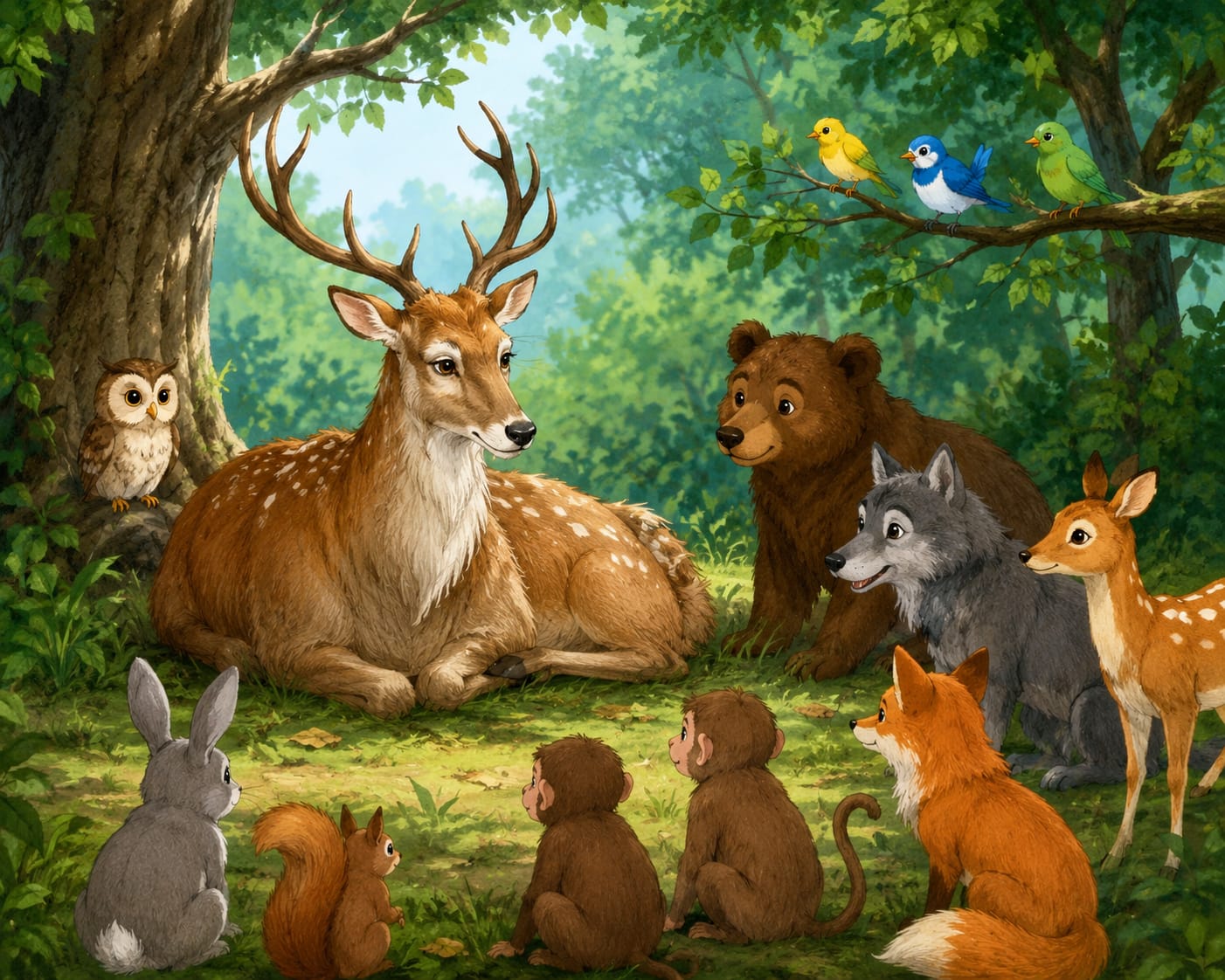
📚 Explore This Lesson

नीचे दिए गए सेक्शनों पर क्लिक करके पाठ को पढ़ें, शब्दार्थ जानें, प्रश्नोत्तर देखें और वर्कबुक अभ्यास पूरा करें।

📖 Let us Read

📖 Summary
पाठ का सरल हिन्दी सारांश
एक हरे-भरे जंगल में एक बूढ़ा हिरण रहता था जो अपनी दयालुता और मित्रवत स्वभाव के लिए प्रसिद्ध था। वह प्रतिदिन अपने साथी पशुओं और पक्षियों से मिलता था। जंगल में भोजन की कोई कमी नहीं थी, फिर भी वह मुलायम घास वाली एक छोटी पहाड़ी पर रहना पसंद करता था। सभी पशु-पक्षी उससे बहुत प्रेम करते थे।
एक दिन बूढ़ा हिरण बीमार पड़ गया और वह पहाड़ी से नीचे नहीं आ सका। वह जानता था कि पौष्टिक भोजन और आराम से वह जल्दी ठीक हो जाएगा। उसके मित्र जब उससे मिलने आए, तो उन्होंने उसकी पहाड़ी की मुलायम घास खाना शुरू कर दिया। वे यह नहीं समझ पाए कि वही घास बूढ़े हिरण के लिए भोजन का मुख्य स्रोत थी।
धीरे-धीरे पहाड़ी की घास कम होने लगी। हाथी और जिराफ जैसे बड़े जानवरों ने भी उस घास को खाना शुरू कर दिया। बूढ़ा हिरण कमजोर होता गया क्योंकि उसके लिए पर्याप्त भोजन नहीं बचा था। उसके मित्रों ने अनजाने में उसकी कठिनाई बढ़ा दी थी।
जब जानवरों को अपनी गलती का एहसास हुआ, तो वे शर्मिंदा हुए। उन्होंने दूसरी जगह से भोजन ढूँढना शुरू किया और बूढ़े हिरण के लिए ताज़ी पत्तियाँ भी लाने लगे। कुछ समय बाद वर्षा हुई, पहाड़ी पर फिर से घास उग आई और बूढ़ा हिरण स्वस्थ हो गया। सभी ने सीखा कि प्रकृति सभी की आवश्यकताओं को पूरा कर सकती है, लेकिन उसके संसाधनों का उपयोग समझदारी से करना चाहिए।
📝 व्याख्या
पाठ की विस्तृत हिन्दी व्याख्या
यह कहानी एक दयालु और समझदार बूढ़े हिरण की है जो जंगल के सभी पशुओं और पक्षियों का प्रिय मित्र था। वह सभी के साथ प्रेम और सम्मान से व्यवहार करता था, इसलिए सभी उसे पसंद करते थे। उसकी सरल जीवनशैली और अच्छा स्वभाव उसे विशेष बनाते थे।
जब बूढ़ा हिरण बीमार पड़ा, तो उसके मित्र उसकी चिंता करने आए। लेकिन उन्होंने यह नहीं सोचा कि जिस घास को वे खा रहे हैं, वही बूढ़े हिरण का मुख्य भोजन है। कई बार लोग बिना सोचे-समझे ऐसे कार्य कर देते हैं जिनसे दूसरों को परेशानी हो सकती है। यह कहानी हमें दूसरों की आवश्यकताओं को समझने की सीख देती है।
जब जानवरों ने देखा कि बूढ़ा हिरण लगातार कमजोर हो रहा है, तब उन्हें अपनी गलती का एहसास हुआ। उन्होंने अपनी आदत बदली और उसकी सहायता करने का निश्चय किया। यह दिखाता है कि गलती होने पर उसे स्वीकार करना और उसे सुधारना एक अच्छी आदत है।
कहानी का मुख्य संदेश यह है कि हमें प्रकृति के संसाधनों का सोच-समझकर उपयोग करना चाहिए। यदि हम केवल अपने बारे में सोचेंगे, तो दूसरों को नुकसान हो सकता है। सहयोग, जिम्मेदारी, मित्रता और संसाधनों का उचित उपयोग हमें एक बेहतर इंसान बनाते हैं।
🌍 English Explanation
Detailed Explanation in English
This story is about a kind and gentle old stag who was loved by all the animals and birds in the forest. He treated everyone with warmth and respect. Because of his friendly nature, he had many friends who cared about him.
When the old stag became ill, his friends came to visit him. However, they unknowingly started eating the tender grass on his hillock. They did not realise that this grass was the stag’s main source of food. The story teaches us to think about the needs of others before using shared resources.
As the grass disappeared, the old stag became weaker. Eventually, the animals understood their mistake and decided to help him. They searched for food elsewhere and brought fresh leaves for their friend. This shows the importance of accepting mistakes and making things right.
The story teaches a valuable lesson about friendship, responsibility, and the wise use of natural resources. Nature provides enough for everyone’s needs, but we must use its resources carefully and avoid selfish behaviour.

🌟 Moral

Nature has enough resources to meet everyone’s needs, but we must use them wisely. True friends care for one another, learn from their mistakes, and help each other in times of need.

प्रकृति सभी की आवश्यकताओं को पूरा करने के लिए पर्याप्त संसाधन प्रदान करती है, लेकिन उनका उपयोग हमें समझदारी से करना चाहिए। सच्चे मित्र एक-दूसरे की परवाह करते हैं, अपनी गलतियों से सीखते हैं और आवश्यकता के समय एक-दूसरे की सहायता करते हैं।

📝 Word Meaning

Word Pronunciation Meaning
Lush लश हरा-भरा
Tender टेंडर मुलायम
Stag स्टैग नर हिरण
Sheltering शेल्टरिंग आश्रय देना
Hillock हिलॉक छोटी पहाड़ी
Recovery रिकवरी स्वस्थ होना / स्वास्थ्य लाभ
Kindness काइंडनेस दयालुता
Warmly वॉर्मली स्नेहपूर्वक
Preferred प्रिफर्ड अधिक पसंद किया
Struggled स्ट्रगल्ड संघर्ष किया
Healthy हेल्दी स्वस्थ
Rest रेस्ट आराम
Weak वीक कमज़ोर
Speedy स्पीडी शीघ्र
Favourite फेवरेट प्रिय
Spread स्प्रेड फैलना
Realised रियलाइज़्ड अहसास हुआ
Ashamed अशेम्ड शर्मिंदा
Resources रिसोर्सेज़ संसाधन
Wisely वाइज़ली समझदारी से

📋 Textbook Solution

🧠 Let us Think
Answer the following questions.
Why did the old stag live on the hillock?
व्हाय डिड द ओल्ड स्टैग लिव ऑन द हिलॉक?
बूढ़ा हिरण पहाड़ी पर क्यों रहता था?

The old stag lived on the hillock because it was covered with soft and tender grass which he enjoyed eating.
द ओल्ड स्टैग लिव्ड ऑन द हिलॉक बिकॉज़ इट वॉज़ कवर्ड विथ सॉफ्ट एंड टेंडर ग्रास विच ही एंजॉयड ईटिंग।
बूढ़ा हिरण पहाड़ी पर रहता था क्योंकि वहाँ मुलायम और कोमल घास उगती थी, जिसे वह खाना पसंद करता था।
Why did the animals and birds visit the old stag?
व्हाय डिड द एनिमल्स एंड बर्ड्स विजिट द ओल्ड स्टैग?
पशु और पक्षी बूढ़े हिरण से मिलने क्यों आए?

The animals and birds visited the old stag because he was ill and they were worried about him.
द एनिमल्स एंड बर्ड्स विजिटेड द ओल्ड स्टैग बिकॉज़ ही वॉज़ इल एंड दे वर वॉरिड अबाउट हिम।
पशु और पक्षी बूढ़े हिरण से मिलने आए क्योंकि वह बीमार था और वे उसकी चिंता कर रहे थे।
Why did the old stag become weaker?
व्हाय डिड द ओल्ड स्टैग बिकम वीकर?
बूढ़ा हिरण और कमजोर क्यों हो गया?

The old stag became weaker because the animals ate the tender grass on the hillock, leaving very little food for him.
द ओल्ड स्टैग बिकेम वीकर बिकॉज़ द एनिमल्स एट द टेंडर ग्रास ऑन द हिलॉक, लीविंग वेरी लिटिल फूड फॉर हिम।
बूढ़ा हिरण और कमजोर हो गया क्योंकि जानवरों ने पहाड़ी की कोमल घास खा ली थी और उसके लिए बहुत कम भोजन बचा था।
What did the animals learn in the end?
व्हाट डिड द एनिमल्स लर्न इन द एंड?
अंत में जानवरों ने क्या सीखा?

The animals learned that nature has enough for everyone’s needs and that its resources should be used wisely.
द एनिमल्स लर्न्ड दैट नेचर हैज़ इनफ फॉर एवरीवन्स नीड्स एंड दैट इट्स रिसोर्सेज़ शुड बी यूज़्ड वाइज़ली।
जानवरों ने सीखा कि प्रकृति सभी की आवश्यकताओं के लिए पर्याप्त है और उसके संसाधनों का उपयोग समझदारी से करना चाहिए।
Think and Discuss
Discuss with your classmates.
Have you ever accidentally caused a problem for someone? What happened?
हैव यू एवर एक्सीडेंटली कॉज्ड अ प्रॉब्लम फॉर समवन? व्हाट हैपन्ड?
क्या आपने कभी अनजाने में किसी के लिए समस्या पैदा की है? क्या हुआ था?

Yes, once I accidentally misplaced my friend’s notebook. I apologised and helped find it.
यस, वन्स आई एक्सीडेंटली मिसप्लेस्ट माय फ्रेंड्स नोटबुक। आई अपोलोजाइज़्ड एंड हेल्प्ड फाइंड इट।
हाँ, एक बार मैंने गलती से अपने मित्र की कॉपी कहीं रख दी थी। मैंने माफी माँगी और उसे ढूँढने में मदद की।
How can we use nature’s resources wisely?
हाउ कैन वी यूज़ नेचर्स रिसोर्सेज़ वाइज़ली?
हम प्रकृति के संसाधनों का समझदारी से उपयोग कैसे कर सकते हैं?

We can use nature’s resources wisely by avoiding waste, planting trees, and using only what we need.
वी कैन यूज़ नेचर्स रिसोर्सेज़ वाइज़ली बाय अवॉइडिंग वेस्ट, प्लांटिंग ट्रीज़ एंड यूज़िंग ओनली व्हाट वी नीड।
हम बर्बादी से बचकर, पेड़ लगाकर और केवल आवश्यकता भर उपयोग करके प्रकृति के संसाधनों का समझदारी से उपयोग कर सकते हैं।
📘 Let us Learn
Match the following words with their meanings.
Word Meaning
Lush forest Green and dense woods/forest
Tender grass Delicate young grass
Shaded spot Cool resting place
Healthy food Nourishing wholesome food
Speedy recovery Quick healing
Descriptive Words
Learn about descriptive words.
Descriptive words tell us more about a person, place, animal, or thing. They help us imagine and understand something better.
डिस्क्रिप्टिव वर्ड्स टेल अस मोर अबाउट अ पर्सन, प्लेस, एनिमल ऑर थिंग।
वर्णनात्मक शब्द किसी व्यक्ति, स्थान, पशु या वस्तु के बारे में अधिक जानकारी देते हैं।
Examples of Descriptive Words

• Lush forest
• Friendly animals
• Shaded spot
• Tender grass
• Healthy food
लश फॉरेस्ट, फ्रेंडली एनिमल्स, शेडेड स्पॉट, टेंडर ग्रास, हेल्दी फूड।
हरा-भरा जंगल, मित्रवत पशु, छायादार स्थान, मुलायम घास, पौष्टिक भोजन।
Read
Read Following lines
Each day, he warmly greeted his fellow animals and birds.
ईच डे, ही वॉर्मली ग्रीटेड हिज फेलो एनिमल्स एंड बर्ड्स।
वह प्रतिदिन अपने साथी पशुओं और पक्षियों का स्नेहपूर्वक अभिवादन करता था।
The word ‘warmly’ is an adverb. Here, ‘warmly’ tells the way or the manner of the stag’s greeting.
द वर्ड ‘वॉर्मली’ इज़ एन एडवर्ब। हियर, ‘वॉर्मली’ टेल्स द वे ऑर द मैनर ऑफ द स्टैग्स ग्रीटिंग।
‘Warmly’ एक क्रिया विशेषण (Adverb) है। यहाँ ‘warmly’ यह बताता है कि हिरण किस प्रकार या किस ढंग से अभिवादन करता था।
Let’s take a look at some more examples:
लेट्स टेक अ लुक एट सम मोर एग्जाम्पल्स।
आइए कुछ और उदाहरणों को देखें।
The old stag slowly recovered.
द ओल्ड स्टैग स्लोली रिकवर्ड।
बूढ़ा हिरण धीरे-धीरे स्वस्थ हो गया।
The rabbit quickly ate the carrots.
द रैबिट क्विकली एट द कैरट्स।
खरगोश ने गाजरों को जल्दी-जल्दी खा लिया।
The adverbs in the above sentences describe:
द एडवर्ब्स इन द अबव सेंटेन्सेज डिस्क्राइब:
ऊपर दिए गए वाक्यों में क्रिया विशेषण यह बताते हैं:
how the old stag recovered.
हाउ द ओल्ड स्टैग रिकवर्ड।
कि बूढ़ा हिरण किस प्रकार स्वस्थ हुआ।
how the rabbit ate the carrots.
हाउ द रैबिट एट द कैरट्स।
कि खरगोश ने गाजर किस प्रकार खाई।
Adverbs
Encircle the adverbs that describe how something is done.
Words:
soon, badly, lately, cheerfully, quietly, early, carefully, highly, fast, regularly, nearby, loudly

Correct Answers
badly, cheerfully, quietly, carefully, fast, loudly
बैडली, चियरफुली, क्वाइटली, केयरफुली, फास्ट, लाउडली
ये ऐसे Adverbs हैं जो बताते हैं कि कोई कार्य किस प्रकार किया गया।
Make Sentences Using Adverbs
Use the given adverbs in sentences.
The boy completed his work carefully.
लड़के ने अपना कार्य सावधानीपूर्वक पूरा किया।
The children sang cheerfully.
बच्चों ने खुशी-खुशी गीत गाया।
The baby slept quietly.
बच्चा शांति से सोया।
The athlete ran fast.
खिलाड़ी तेज़ दौड़ा।
The dog barked loudly.
कुत्ता ज़ोर से भौंका।
The player performed badly.
खिलाड़ी ने खराब प्रदर्शन किया।
✍️ Let us Write
Complete the activities given below.
A. Complete the Story
संवाद बुलबुलों को पूरा कीजिए।
Complete the story by writing dialogues in the speech blurbs.
1. Yes, we will fast with you.

2. We must not eat anything today.

3. We have collected many bananas for later.

4. No harm in holding just one banana.

5. Looking at bananas makes me feel comforted.

6. Let us all peel the bananas carefully.

7. It will be sunset soon.

8. Mmm… I think I’ll take just one bite!
B. My Best Friend
अनुच्छेद को पूरा कीजिए।
Write about your best friend and complete the paragraph.
My best friend’s name is Anikesh. He is a 10-year-old boy and studies in Class 4. There are five members in his family. His hobbies are reading storybooks and playing cricket. He wants to be a doctor. When we are together, we play games and study happily. Rahul is my best friend because he is kind, honest and helpful.
🗣️ Let us Speak
Discuss the picture and answer the questions.
Look at this picture.
इस चित्र को ध्यान से देखिए। कुछ बच्चे एक बड़ी प्लेट में रखी जलेबियों को देख रहे हैं।
How would you feel if the jalebis were almost finished, but some friends hadn’t had enough yet?
मुझे दुःख होगा क्योंकि सभी मित्रों को बराबर अवसर मिलना चाहिए। मैं चाहूँगा कि जलेबियाँ सभी में समान रूप से बाँटी जाएँ।
What will happen to the bowl of jalebis after some time?
कुछ समय बाद जलेबियों की प्लेट खाली हो जाएगी क्योंकि बच्चे उन्हें खाते रहेंगे।
Why is it important to share when we have something that everyone enjoys?
साझा करना महत्वपूर्ण है क्योंकि इससे सभी लोग खुश रहते हैं और आपसी प्रेम तथा सहयोग बढ़ता है।
How can we make sure there are enough jalebis for everyone to enjoy?
हमें जलेबियों को बराबर-बराबर बाँटना चाहिए और अपनी आवश्यकता से अधिक नहीं लेना चाहिए, ताकि सभी को पर्याप्त मात्रा मिल सके।
What lesson do we learn from this activity?
हम सीखते हैं कि हमें संसाधनों का समझदारी से उपयोग करना चाहिए और दूसरों के साथ मिल-बाँटकर रहना चाहिए।
🎨 Let us Do
Create a Thank You Card from the Old Stag.
Imagine you are the old stag. Write a thank you message to your friends who helped you during your illness.
कल्पना कीजिए कि आप बूढ़े हिरण हैं। अपने उन मित्रों के लिए धन्यवाद संदेश लिखिए जिन्होंने बीमारी के समय आपकी सहायता की।
Sample Thank You Card
Dear Friends,

Thank you for your kindness, care and support during my illness. I was very weak and unable to find food for myself. You understood your mistake, brought fresh leaves for me and helped me recover.

Your friendship means a lot to me. I am grateful to have such caring friends. Let us always share nature’s gifts wisely and help one another.

With Love,
The Old Stag
हिन्दी भावार्थ
प्रिय मित्रों,

मेरी बीमारी के समय आपकी दया, देखभाल और सहायता के लिए धन्यवाद। मैं बहुत कमजोर हो गया था और अपने लिए भोजन भी नहीं जुटा पा रहा था। आपने अपनी गलती को समझा, मेरे लिए ताज़ी पत्तियाँ लाईं और मुझे स्वस्थ होने में मदद की।

आपकी मित्रता मेरे लिए बहुत मूल्यवान है। ऐसे अच्छे मित्र पाकर मैं स्वयं को भाग्यशाली मानता हूँ। आइए, हम प्रकृति के संसाधनों का समझदारी से उपयोग करें और हमेशा एक-दूसरे की सहायता करें।

आपका मित्र,
बूढ़ा हिरण

📖 Workbook Solution

📄 Worksheet 06
Read the paragraph carefully and answer the following questions.
Read the paragraph carefully.
रीड द पैराग्राफ केयरफुली।
दिए गए अनुच्छेद को ध्यानपूर्वक पढ़िए।

In a lush forest, lived an old stag who was known for his kindness. Each day, he warmly greeted his fellow animals and birds. Though the forest offered plenty of food, the stag preferred staying on a small hillock with tender grass.
इन अ लश फॉरेस्ट, लिव्ड एन ओल्ड स्टैग हू वॉज़ नोन फॉर हिज काइंडनेस। ईच डे, ही वॉर्मली ग्रीटेड हिज फेलो एनिमल्स एंड बर्ड्स। थो द फॉरेस्ट ऑफर्ड प्लेन्टी ऑफ फूड, द स्टैग प्रिफर्ड स्टेइंग ऑन अ स्मॉल हिलॉक विथ टेंडर ग्रास।
एक हरे-भरे जंगल में एक बूढ़ा हिरण रहता था जो अपनी दयालुता के लिए प्रसिद्ध था। वह प्रतिदिन अपने साथी पशुओं और पक्षियों का स्नेहपूर्वक अभिवादन करता था। जंगल में बहुत भोजन होने के बावजूद वह मुलायम घास वाली छोटी पहाड़ी पर रहना पसंद करता था।
Q.1 Where did the old stag live?
व्हेयर डिड द ओल्ड स्टैग लिव?
बूढ़ा हिरण कहाँ रहता था?

The old stag lived in a lush forest on a small hillock with tender grass.
द ओल्ड स्टैग लिव्ड इन अ लश फॉरेस्ट ऑन अ स्मॉल हिलॉक विथ टेंडर ग्रास।
बूढ़ा हिरण हरे-भरे जंगल में मुलायम घास वाली एक छोटी पहाड़ी पर रहता था।
Q.2 Give the meaning of the word “lush”.
गिव द मीनिंग ऑफ द वर्ड लश।
“Lush” शब्द का अर्थ बताइए।

Lush means green, rich and full of healthy plants.
लश मीन्स ग्रीन, रिच एंड फुल ऑफ हेल्दी प्लांट्स।
Lush का अर्थ है हरा-भरा, घना और हरियाली से भरपूर।
Q.3 How did the old stag greet his fellow animals?
हाउ डिड द ओल्ड स्टैग ग्रीट हिज फेलो एनिमल्स?
बूढ़ा हिरण अपने साथी पशुओं का अभिवादन कैसे करता था?

He warmly greeted his fellow animals and birds every day.
ही वॉर्मली ग्रीटेड हिज फेलो एनिमल्स एंड बर्ड्स एवरी डे।
वह प्रतिदिन अपने साथी पशुओं और पक्षियों का स्नेहपूर्वक अभिवादन करता था।
Q.4 Is the word “warmly” an adjective or an adverb?
इज़ द वर्ड “वॉर्मली” एन एडजेक्टिव ऑर एन एडवर्ब?
“Warmly” शब्द विशेषण (Adjective) है या क्रिया विशेषण (Adverb)?

Warmly is an adverb. It tells us how the old stag greeted his fellow animals.
वॉर्मली इज़ एन एडवर्ब। इट टेल्स अस हाउ द ओल्ड स्टैग ग्रीटेड हिज फेलो एनिमल्स।
Warmly एक क्रिया विशेषण (Adverb) है। यह बताता है कि बूढ़े हिरण ने अपने साथियों का किस प्रकार अभिवादन किया।
Q.5 Find a word from the paragraph that means the same as “delicate”.
फाइंड अ वर्ड फ्रॉम द पैराग्राफ दैट मीन्स द सेम ऐज़ डेलिकेट।
अनुच्छेद में से ऐसा शब्द लिखिए जिसका अर्थ “delicate” के समान हो।

The word is tender.
द वर्ड इज़ टेंडर।
सही शब्द है — Tender (मुलायम / कोमल)
Q.6 Suggest a new title for the story “The Old Stag”.
सजेस्ट अ न्यू टाइटल फॉर द स्टोरी “द ओल्ड स्टैग”।
‘The Old Stag’ कहानी के लिए कोई नया उपयुक्त शीर्षक लिखिए।

A Kind Friend
OR
The Kind-Hearted Stag
अ काइंड फ्रेंड / द काइंड हार्टेड स्टैग।
एक दयालु मित्र
अथवा
दयालु हृदय वाला बूढ़ा हिरण
📄 Worksheet 07
Rewrite the events in the correct order.
Correct Order
करेक्ट ऑर्डर
घटनाओं का सही क्रम

1. The old stag lived on a small hillock. (6)

2. The stag could not meet his friends because he was unwell. (2)

3. The tender green grass was enjoyed by all the animals. (4)

4. The animals felt ashamed after they realized they had eaten all the grass. (3)

5. The animals brought fresh leaves for the stag. (7)

6. The grass grew back after it rained. (1)

7. Slowly, the old stag recovered from the illness. (5)
📄 Worksheet 08
Read the story and solve the riddles.
1. I am soft and yummy, the stag’s favourite food. Who am I?
आई एम सॉफ्ट एंड यम्मी, द स्टैग्स फेवरेट फूड। हू एम आई?
मैं मुलायम और स्वादिष्ट हूँ। मैं बूढ़े हिरण का पसंदीदा भोजन हूँ। मैं कौन हूँ?

Tender Grass
टेंडर ग्रास
मुलायम घास
2. I am covered with soft green grass and the stag preferred to stay on me. Who am I?
आई एम कवर्ड विथ सॉफ्ट ग्रीन ग्रास एंड द स्टैग प्रिफर्ड टू स्टे ऑन मी। हू एम आई?
मैं मुलायम हरी घास से ढकी हूँ और हिरण मुझ पर रहना पसंद करता था। मैं कौन हूँ?

Hillock
हिलॉक
छोटी पहाड़ी
3. I am kind and gentle and greet my friends warmly. Who am I?
आई एम काइंड एंड जेंटल एंड ग्रीट माय फ्रेंड्स वॉर्मली। हू एम आई?
मैं दयालु और विनम्र हूँ तथा अपने मित्रों का स्नेहपूर्वक अभिवादन करता हूँ। मैं कौन हूँ?

The Old Stag
द ओल्ड स्टैग
बूढ़ा हिरण
Describe the Stag
हिरण का वर्णन करने वाले चार शब्द
Kind
Gentle
Friendly
Helpful
काइंड, जेंटल, फ्रेंडली, हेल्पफुल
दयालु, विनम्र, मित्रवत, सहायक
Make Sentences
दिए गए शब्दों का प्रयोग करके वाक्य बनाइए।
1. Kind
The old stag was kind to every animal.
द ओल्ड स्टैग वॉज़ काइंड टू एवरी एनिमल।
बूढ़ा हिरण सभी जानवरों के प्रति दयालु था।
2. Gentle
The gentle stag greeted everyone warmly.
द जेंटल स्टैग ग्रीटेड एवरीवन वॉर्मली।
विनम्र हिरण सभी का स्नेहपूर्वक अभिवादन करता था।
3. Friendly
The stag was friendly with all the animals.
द स्टैग वॉज़ फ्रेंडली विथ ऑल द एनिमल्स।
हिरण सभी जानवरों का मित्र था।
4. Helpful
Helpful friends always care for each other.
हेल्पफुल फ्रेंड्स ऑलवेज केयर फॉर ईच अदर।
सहायक मित्र हमेशा एक-दूसरे की परवाह करते हैं।
📄 Worksheet 09
Underline the adverb in each sentence.
What is an Adverb?
Adverb (क्रिया विशेषण)
An adverb is a word that tells us more about a verb. It describes how, when, where or how often an action happens.
एन एडवर्ब इज़ अ वर्ड दैट टेल्स अस मोर अबाउट अ वर्ब। इट डिस्क्राइब्स हाउ, व्हेन, व्हेयर ऑर हाउ ऑफ़न एन एक्शन हैपन्स.
Adverb (क्रिया विशेषण) वह शब्द है जो किसी क्रिया के बारे में अधिक जानकारी देता है। यह बताता है कि कोई कार्य कैसे, कब, कहाँ या कितनी बार किया गया।

Examples:
• He runs fast.
• She speaks softly.
• The old stag greeted everyone warmly.
उदाहरण:
• वह तेज़ दौड़ता है।
• वह धीरे बोलती है।
• बूढ़ा हिरण सभी का स्नेहपूर्वक अभिवादन करता था।
1. The old stag greeted his friends gently.

gently
2. His friends realized their mistake quickly.

quickly
3. The animals promised sincerely not to eat the grass again.

sincerely
4. The stag recovered slowly.

slowly
5. We should use the resources of nature wisely.

wisely
Fill in the blanks
Help Box से उचित Adverb चुनकर रिक्त स्थान भरिए।
1. It is raining __________.

heavily
2. The sun shone __________ in the sky.

brightly
3. The soldiers fought __________ and won the battle.

bravely
4. The children played __________ in the park.

merrily
5. She picked up the broken glass __________.

carefully
6. The wind blew __________.

gently
📄 Worksheet 10
Fill in the blanks by choosing suitable pronouns from the help box.
What is a Pronoun?
Pronoun (सर्वनाम)
A pronoun is a word that is used in place of a noun. It helps us avoid repeating the same noun again and again.
अ प्रोनाउन इज़ अ वर्ड दैट इज़ यूज़्ड इन प्लेस ऑफ अ नाउन।
Pronoun (सर्वनाम) वह शब्द है जो किसी संज्ञा (Noun) के स्थान पर प्रयोग किया जाता है, ताकि एक ही संज्ञा को बार-बार न दोहराना पड़े।

Examples:
He, She, It, They, We, I, You
Correct Answers
सही उत्तर
1. My mother is a doctor. ________ works in a hospital.

She
2. The students are in the library. ________ are reading books.

They
3. I am going to the park. Are ________ coming with me?

you
4. Ali has a kitten. ________ loves it a lot.

He
5. Sara has a pup. ________ has a short tail.

It
6. My brother loves cricket. ________ play cricket together.

We
7. My name is Anjali. ________ am ten years old.

I
Scroll to Top