

About The Lesson
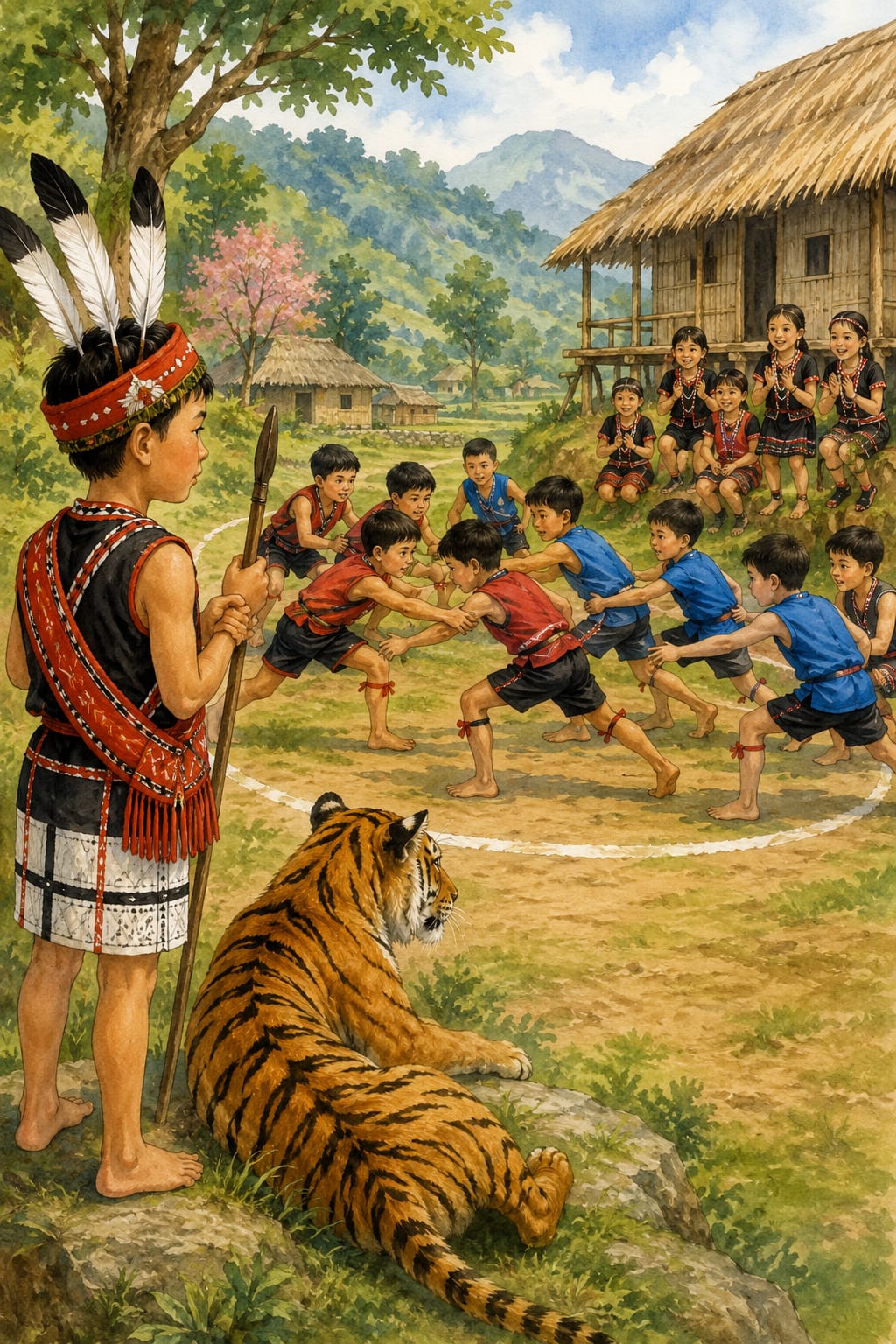
“Hekko” कक्षा 4 की NCERT अंग्रेज़ी पाठ्यपुस्तक Santoor का एक ज्ञानवर्धक एवं सांस्कृतिक पाठ है। यह पाठ नागालैंड के प्रसिद्ध पारंपरिक खेल हेक्को (Hekko) से विद्यार्थियों का परिचय कराता है। ‘हेक’ का अर्थ चुनौती (Challenge) और ‘को’ का अर्थ बाघ (Tiger) होता है। लोककथा और खेल के सुंदर मेल के माध्यम से यह बताया गया है कि किस प्रकार एक प्राचीन कहानी समय के साथ एक लोकप्रिय टीम खेल का रूप ले लेती है। पाठ में खेल के नियम, खिलाड़ियों की भूमिका, टीम भावना तथा निष्पक्ष प्रतिस्पर्धा का सरल एवं रोचक वर्णन किया गया है।
इस पाठ के माध्यम से विद्यार्थी भारत की सांस्कृतिक विविधता, विशेषकर उत्तर-पूर्वी राज्यों की लोक परंपराओं और खेल संस्कृति को समझते हैं। साथ ही वे नए शब्द, समान उच्चारण वाले शब्द (Homophones), भूतकाल (Past Tense), वाक्य प्रयोग तथा भाषा अभ्यास जैसी महत्वपूर्ण अंग्रेज़ी अवधारणाओं का अभ्यास करते हैं। पाठ में दिए गए प्रश्न, गतिविधियाँ और समूह चर्चा बच्चों में तार्किक चिंतन, अभिव्यक्ति कौशल, सहयोग, अनुशासन तथा खेल भावना का विकास करती हैं। यह पाठ विद्यार्थियों को यह प्रेरणा देता है कि किसी भी प्रतियोगिता में साहस, नियमों का पालन, पारस्परिक सम्मान और टीमवर्क ही वास्तविक सफलता की पहचान होते हैं।
📚 Explore This Lesson
नीचे दिए गए सेक्शनों पर क्लिक करके पाठ को पढ़ें, शब्दार्थ जानें, प्रश्नोत्तर देखें और वर्कबुक अभ्यास पूरा करें।
📖 Let us Read
🌟 Moral
📝 Word Meaning
| Word | Pronunciation | Meaning |
|---|---|---|
| Challenge | चैलेंज | चुनौती |
| Tiger | टाइगर | बाघ |
| Folk Story | फोक स्टोरी | लोककथा |
| Means | मीन्स | अर्थ होता है |
| Humans | ह्यूमन्स | मनुष्य |
| Animals | एनिमल्स | जानवर |
| Disagreement | डिसएग्रीमेंट | मतभेद |
| Superiority | सुपीरियॉरिटी | श्रेष्ठता |
| Presently | प्रेज़ेन्टली | वर्तमान में |
| District | डिस्ट्रिक्ट | जिला |
| Sport | स्पोर्ट | खेल |
| Team | टीम | दल / टीम |
| Strongest | स्ट्रॉन्गेस्ट | सबसे शक्तिशाली |
| Player | प्लेयर | खिलाड़ी |
| Toss | टॉस | सिक्का उछालना |
| Decides | डिसाइड्स | निर्णय करता है |
| Circle | सर्कल | घेरा |
| Human Chain | ह्यूमन चेन | मानव श्रृंखला |
| Outside | आउटसाइड | बाहर |
| Enter | एंटर | प्रवेश करना |
| Push | पुश | धक्का देना |
| Catch | कैच | पकड़ना |
| Surrender | सरेंडर | समर्पण करना |
| Released | रिलीज्ड | छोड़ा गया |
| Point | पॉइंट | अंक |
| Winner | विनर | विजेता |
| Declared | डिक्लेअर्ड | घोषित किया गया |
| Awarded | अवॉर्डेड | सम्मानित किया गया |
| Title | टाइटल | उपाधि |
| Fastest | फास्टेस्ट | सबसे तेज़ |
| Known | नोन | प्रसिद्ध |
| Identify | आइडेंटिफाई | पहचानना |
| Village | विलेज | गाँव |
| Opponent | ओपोनेंट | प्रतिद्वंद्वी |
| Victory | विक्ट्री | विजय |
📋 Textbook Solution
• They completed their work very fast.
दे कम्प्लीटेड देयर वर्क वेरी फास्ट।
• उन्होंने अपना कार्य बहुत जल्दी पूरा किया।
• I was too tired after playing.
आई वॉज़ टू टायर्ड आफ्टर प्लेइंग।
• खेलकर मैं बहुत थक गया/गई था।
• I can see the clouds through my window pane.
आई कैन सी द क्लाउड्स थ्रू माय विंडो पेन।
• मैं अपनी खिड़की के शीशे से बादलों को देख सकता/सकती हूँ।
• I sleep on a cot when I am at my grandmother’s village.
आई स्लीप ऑन अ कॉट व्हेन आई एम एट माय ग्रैंडमदर्स विलेज।
• मैं अपनी दादी के गाँव में चारपाई पर सोता/सोती हूँ।
• Write in a neat and legible handwriting.
राइट इन अ नीट एंड लेजिबल हैंडराइटिंग।
• साफ़ और सुन्दर लिखावट में लिखिए।
| Sound | Answers |
|---|---|
| st | Stairs, Star, Stool |
| ch | Chair, Child, Chocolate |
| gl | Glue, Glass, Glove |
| Animal | Pronunciation | Meaning | Sound | Meaning |
|---|---|---|---|---|
| Tiger | टाइगर | बाघ | Roars | दहाड़ता है |
| Horse | हॉर्स | घोड़ा | Neighs | हिनहिनाता है |
| Elephant | एलिफेंट | हाथी | Trumpets | चिंघाड़ता है |
| Dove | डव | फाख्ता / कबूतर | Coos | गुटर-गूँ करता है |
| Goat | गोट | बकरी | Bleats | में-में करती है |
| Monkey | मंकी | बंदर | Whoops | किलकारी / चिल्लाने की आवाज़ निकालता है |
• In the Simple Past Tense, we generally add -ed to regular verbs.
• Some verbs do not take -ed. They are called Irregular Verbs.
• सामान्य क्रियाओं में Simple Past बनाने के लिए प्रायः -ed जोड़ा जाता है।
• कुछ क्रियाओं में -ed नहीं लगता। उन्हें Irregular Verbs (अनियमित क्रियाएँ) कहते हैं।
1. Skipping Rope (रस्सी कूद)
2. Rolling Tyre (टायर दौड़ाना)
3. Kite Flying (पतंग उड़ाना)
4. Spinning Top (लट्टू घुमाना)
Time: 30 Minutes
Number of Players: 6–10
Material Needed: Clue cards, small gifts, cones and a whistle.
Rules:
- Players are divided into two teams.
- Each team follows clues to find the hidden treasure.
- The team that finds the treasure first wins.
- Players must play honestly and help their teammates.
- Do not hide clues.
- Do not push or disturb other players.
- Do not break the rules of the game.
टाइम: थर्टी मिनट्स
नम्बर ऑफ प्लेयर्स: सिक्स टू टेन
मैटेरियल नीडेड: क्लू कार्ड्स, स्मॉल गिफ्ट्स, कोन्स एंड अ व्हिसल।
समय: 30 मिनट
खिलाड़ियों की संख्या: 6 से 10
आवश्यक सामग्री: संकेत कार्ड, छोटे उपहार, कोन तथा सीटी।
नियम:
- खिलाड़ियों को दो टीमों में बाँटा जाएगा।
- प्रत्येक टीम संकेतों का पालन करके छिपा हुआ खजाना खोजेगी।
- जो टीम सबसे पहले खजाना ढूँढ़ लेगी, वही विजेता होगी।
- सभी खिलाड़ी ईमानदारी से खेलेंगे और अपने साथियों की सहायता करेंगे।
- संकेतों को छिपाना या हटाना नहीं है।
- दूसरे खिलाड़ियों को धक्का देना या परेशान करना नहीं है।
- खेल के नियमों का उल्लंघन नहीं करना है।
• It is the most famous festival of Nagaland.
• It is celebrated every year from 1st to 10th December.
• It is held at Kisama Heritage Village, near Kohima.
• People from different Naga tribes take part in the festival.
• They perform traditional dances, songs and folk music.
• Visitors enjoy traditional food, handicrafts and games.
• The festival helps preserve and promote the rich culture of Nagaland.
इट इज़ द मोस्ट फेमस फेस्टिवल ऑफ नागालैंड।
इट इज़ सेलिब्रेटेड एवरी ईयर फ्रॉम फर्स्ट टू टेन्थ डिसेम्बर।
इट इज़ हेल्ड एट किसामा हेरिटेज विलेज, नियर कोहिमा।
पीपल फ्रॉम डिफरेंट नागा ट्राइब्स टेक पार्ट इन द फेस्टिवल।
दे परफॉर्म ट्रेडिशनल डांसेज़, सॉन्ग्स एंड फोक म्यूज़िक।
विजिटर्स एन्जॉय ट्रेडिशनल फूड, हैंडीक्राफ्ट्स एंड गेम्स।
द फेस्टिवल हेल्प्स प्रिज़र्व एंड प्रमोट द रिच कल्चर ऑफ नागालैंड.
• यह नागालैंड का सबसे प्रसिद्ध उत्सव है।
• यह प्रत्येक वर्ष 1 से 10 दिसम्बर तक मनाया जाता है।
• इसका आयोजन किसामा हेरिटेज विलेज, कोहिमा के निकट होता है।
• इसमें नागालैंड की विभिन्न जनजातियाँ भाग लेती हैं।
• यहाँ पारंपरिक नृत्य, गीत और लोक संगीत प्रस्तुत किए जाते हैं।
• लोग पारंपरिक भोजन, हस्तशिल्प और खेलों का आनंद लेते हैं।
• यह उत्सव नागालैंड की समृद्ध संस्कृति के संरक्षण और प्रचार में महत्वपूर्ण भूमिका निभाता है।
📖 Workbook Solution
| Animal | Correct Sound |
|---|---|
| Dog | Barks |
| Cat | Meows |
| Bird | Tweets |
| Cow | Moos |
| Monkey | Chatters |
| Lion | Roars |
| Word | Pronunciation | Hindi Meaning |
|---|---|---|
| Bark | बार्क | भौंकना |
| Meow | मियाउ | म्याऊँ करना |
| Tweet | ट्वीट | चहचहाना |
| Moo | मू | रंभाना |
| Chatter | चैटर | चटर-पटर करना |
| Roar | रोअर | दहाड़ना |
| No. | Sentence | Answer |
|---|---|---|
| 1 | The ________ is a star. | sun |
| 2 | My ________ gifted me a pen on my birthday. | son |
| 3 | What is the ________ for a taxi? | fare |
| 4 | We go to the ________ to enjoy. | fair |
| 5 | Let’s ________ at the park. | meet |
| 6 | Dogs love to eat ________. | meat |
| 7 | A ________ runs very fast. | hare |
| 8 | My ________ are black. | hair |
| 9 | ______ like singing. | I |
| 10 | An ________ is a sense organ. | eye |
| Words | Meaning (English) | हिन्दी अर्थ |
|---|---|---|
| sun | The star that gives us light and heat | सूर्य |
| son | A male child | पुत्र |
| fare | Money paid for travelling | किराया |
| fair | A large public event or mela | मेला |
| meet | To come together | मिलना |
| meat | Animal flesh used as food | मांस |
| hare | A wild rabbit | खरगोश |
| hair | Hair on the head | बाल |
| I | First person pronoun | मैं |
| eye | Sense organ used for seeing | आँख |
Maya, a clever crow lived on the branch of a big neem tree near the temple. She loved tasty treats, especially til laddoos. One morning, she saw a basket of sweets besides the temple steps. The basket was carefully placed between two pots of marigold.
Maya wanted the laddoos. She flew above the basket but noticed a dog sitting under the tree. She thought, “I must be careful.” Maya then hid behind a flower pot, watching the villagers place more sweets in front of the temple.
There, a little boy was eating laddoos, a few crumbs fell on the ground. Maya quickly picked them up and shared them with her friends.
| Blank No. | Correct Answer |
|---|---|
| 1 | on |
| 2 | besides |
| 3 | between |
| 4 | above |
| 5 | under |
| 6 | behind |
| 7 | in front of |
| Preposition | हिन्दी अर्थ |
|---|---|
| on | पर |
| besides | बगल में / पास में |
| between | दो के बीच |
| above | ऊपर |
| under | नीचे |
| behind | पीछे |
| in front of | सामने |
Mary Kom started (start) her journey in Manipur. She worked (work) very hard from her childhood and trained (train) herself to become a famous boxer one day. She practiced (practice) with discipline and improved (improve) her boxing skill. She played (play) in many tournaments and fought bravely. She competed (compete) against strong players and collected (collect) many medals. She inspired (inspire) young girls and encouraged (encourage) them to follow their goals. She earned (earn) great respect for India and shined (shine) as the “Magnificent Mary”.
| No. | Verb | Past Form (-ed) |
|---|---|---|
| 1 | start | started |
| 2 | work | worked |
| 3 | train | trained |
| 4 | practice | practiced |
| 5 | improve | improved |
| 6 | play | played |
| 7 | compete | competed |
| 8 | collect | collected |
| 9 | inspire | inspired |
| 10 | encourage | encouraged |
| 11 | earn | earned |
| 12 | shine | shined |
Examples:
start → started
work → worked
train → trained
improve → improved
collect → collected
Note: कुछ Verbs (जैसे go → went, come → came) में -ed नहीं लगता। इन्हें Irregular Verbs कहते हैं.