
Lesson 10 – The Swing

📘 Class 4 • 📚 English • 🏫 NCERT

About The Lesson

“The Swing” कक्षा 4 की NCERT अंग्रेज़ी पाठ्यपुस्तक Santoor का एक सुंदर एवं कल्पनाशील पाठ है। यह प्रसिद्ध कवि Robert Louis Stevenson द्वारा लिखी गई कविता है। इस कविता में एक बच्चा झूले पर झूलते हुए अपने चारों ओर के सुंदर प्राकृतिक दृश्यों का आनंद लेता है। झूला ऊपर-नीचे होने पर उसे आकाश, पेड़, बगीचा, नदी, छतें और दूर-दूर तक फैला हुआ ग्रामीण वातावरण दिखाई देता है। कविता बच्चों की कल्पनाशक्ति को विकसित करती है तथा उन्हें प्रकृति के सौन्दर्य का आनंद लेने के लिए प्रेरित करती है।

यह पाठ विद्यार्थियों में प्रकृति-प्रेम, अवलोकन क्षमता, कल्पनाशक्ति तथा रचनात्मक सोच का विकास करता है। पाठ के माध्यम से बच्चे Rhyming Words, Nouns and Verbs, सही उच्चारण, वाक्य निर्माण तथा नए शब्दों का अभ्यास करते हैं। विभिन्न गतिविधियों, लेखन कार्य, बोलने, सुनने और कार्यपुस्तिका अभ्यासों के माध्यम से विद्यार्थियों के भाषा कौशल, आत्मविश्वास, अभिव्यक्ति क्षमता तथा रचनात्मक लेखन का समग्र विकास होता है। यह कविता बच्चों को प्रकृति के साथ समय बिताने, आनंदपूर्वक सीखने तथा अपने आसपास की दुनिया को ध्यानपूर्वक देखने की प्रेरणा देती है।
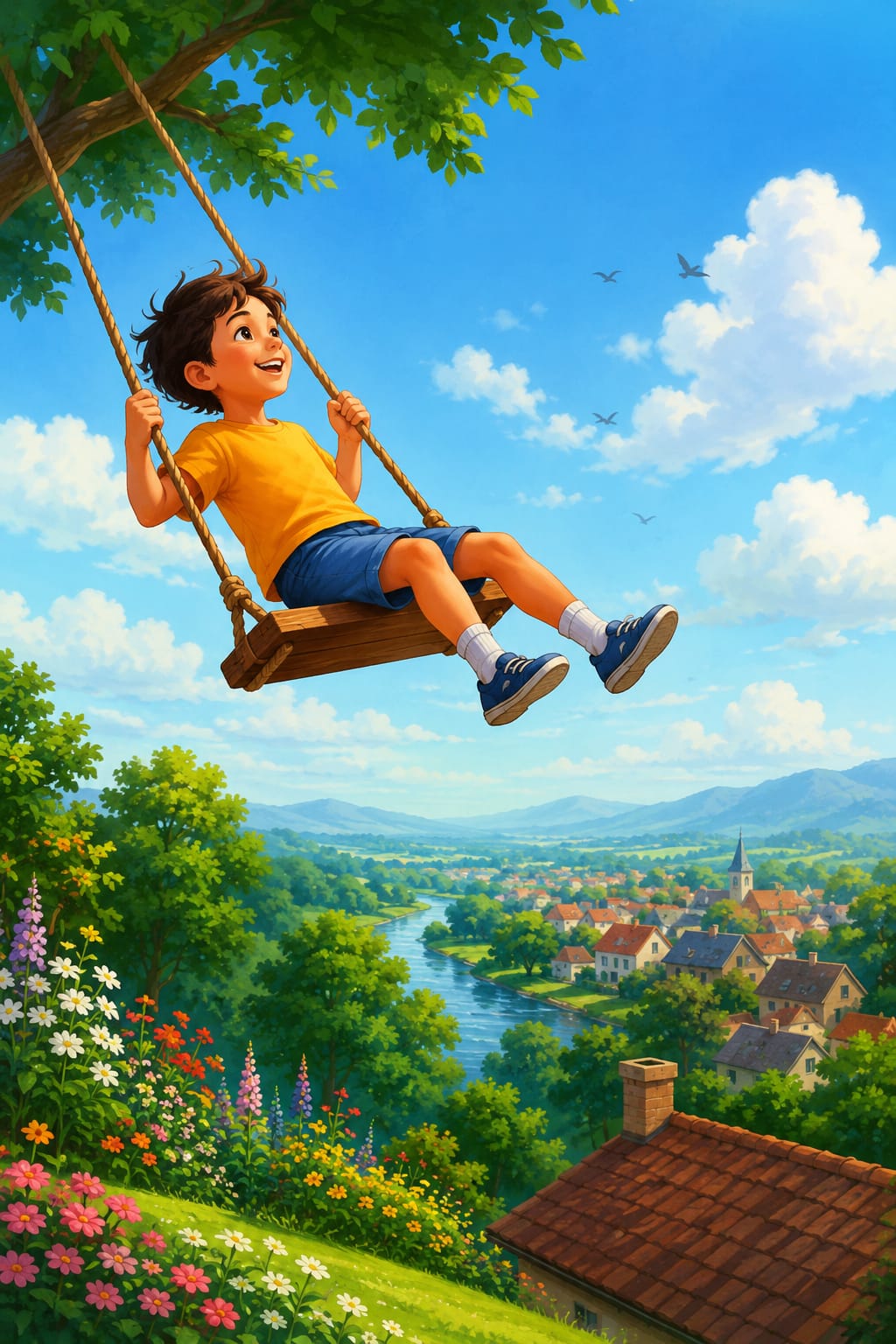
The Swing – A happy child enjoying a swing high in the air with a beautiful green garden, trees, flowers, blue sky, clouds, rooftops, and a peaceful countryside in the background.

📚 Explore This Lesson

नीचे दिए गए सेक्शनों पर क्लिक करके पाठ को पढ़ें, शब्दार्थ जानें, प्रश्नोत्तर देखें और वर्कबुक अभ्यास पूरा करें।

📖 Let us Recite

📖 कविता का सरल हिन्दी अर्थ
प्रत्येक पद (Stanza) का सरल हिन्दी अर्थ
झूले पर झूलना सबसे अधिक आनंददायक अनुभवों में से एक है। जब हम ऊपर-नीचे झूलते हैं तो ऐसा लगता है मानो हम आकाश को छू रहे हों। चारों ओर का सुंदर दृश्य देखकर मन प्रसन्न हो जाता है।
झूले पर बैठकर हमें दूर-दूर तक नदी, पेड़, पशु, खेत और गाँव के घर दिखाई देते हैं। ऊँचाई से देखने पर प्रकृति का प्रत्येक दृश्य और भी सुंदर तथा आकर्षक लगता है।
जब झूला सबसे ऊँचाई तक पहुँचता है, तब ऐसा प्रतीत होता है मानो हम पक्षियों के साथ उड़ रहे हों। खुला नीला आकाश और उड़ते हुए पक्षी मन में उत्साह और आनंद भर देते हैं।
कवि बताता है कि झूले पर बैठकर ऊँचाई से धरती और प्रकृति का दृश्य देखना संसार के सबसे सुखद अनुभवों में से एक है। यह हमें प्रकृति के और भी निकट ले जाता है।
📝 व्याख्या
कविता की विस्तृत हिन्दी व्याख्या
प्रस्तुत कविता “The Swing” में कवि Robert Louis Stevenson ने झूले पर झूलने के आनंद का अत्यंत सुंदर वर्णन किया है। कवि के अनुसार झूले पर बैठकर ऊपर-नीचे झूलना बच्चों का सबसे प्रिय और आनंददायक खेल है।
जब झूला ऊपर जाता है, तब दूर तक फैले हुए हरे-भरे खेत, बहती हुई नदी, चरते हुए पशु, पेड़ तथा गाँव के घर स्पष्ट दिखाई देते हैं। यह दृश्य मन को प्रसन्नता और शांति प्रदान करता है। प्रकृति का सौंदर्य ऊँचाई से और भी आकर्षक दिखाई देता है।
झूला जब सबसे ऊँचाई पर पहुँचता है, तब ऐसा अनुभव होता है जैसे हम पक्षियों के साथ आकाश में उड़ रहे हों। नीला आकाश, उड़ते पक्षी और खुला वातावरण मन में उत्साह, स्वतंत्रता तथा रोमांच का अनुभव कराते हैं।
यह कविता हमें प्रकृति से प्रेम करने, उसके सौंदर्य का आनंद लेने तथा छोटे-छोटे पलों में खुशी खोजने की प्रेरणा देती है। साथ ही यह संदेश भी देती है कि खेल-कूद और प्रकृति के बीच बिताया गया समय हमारे जीवन को आनंदमय और स्वस्थ बनाता है।
🌍 English Explanation
Detailed Explanation in English
In the poem “The Swing”, Robert Louis Stevenson describes the wonderful joy of swinging. The poet says that swinging high in the air is one of the happiest experiences for children.
As the swing goes higher, the child can see rivers, green gardens, cattle, trees and houses in the countryside. The beautiful scenery looks even more attractive from above.
When the swing reaches its highest point, it feels as if the child is flying with the birds in the blue sky. This gives a feeling of freedom, excitement and happiness.
The poem teaches us to enjoy nature, appreciate its beauty and find happiness in simple moments of life. Outdoor games and nature make our lives healthy, joyful and refreshing.

🌟 Moral

We should enjoy the beauty of nature and spend time playing outdoor games. Nature makes us happy, healthy and cheerful. We should always appreciate the little joys of life and stay active.

हमें प्रकृति की सुंदरता का आनंद लेना चाहिए और खुले वातावरण में खेलना चाहिए। प्रकृति हमें स्वस्थ, प्रसन्न और ऊर्जावान बनाती है। हमें जीवन की छोटी-छोटी खुशियों का आनंद लेना चाहिए तथा हमेशा सक्रिय रहना चाहिए।

📝 Word Meaning

Word Pronunciation Meaning
Swing स्विंग झूला
Pleasantest प्लेज़न्टेस्ट सबसे सुखद / सबसे आनंददायक
Countryside कंट्रीसाइड ग्रामीण क्षेत्र / देहात
River रिवर नदी
Garden गार्डन बगीचा
Cattle कैटल मवेशी / पशुधन
Green ग्रीन हरा
Blue ब्लू नीला
Sky स्काई आकाश
Birds बर्ड्स पक्षी
Fly फ्लाई उड़ना
Air एयर हवा
Roof रूफ छत
Tree ट्री पेड़
Brown ब्राउन भूरा
Beyond बियॉन्ड से भी आगे / परे
See सी देखना
High हाई ऊँचा
Down डाउन नीचे
Joy जॉय आनंद / खुशी

📋 Textbook Solution

🧠 Let us Think
A. Answer the following.
1. What does the poet see when the swing goes over the wall?
व्हाट डज़ द पोएट सी व्हेन द स्विंग गोज़ ओवर द वॉल?
जब झूला दीवार से ऊपर जाता है, तब कवि क्या देखता है?

The poet sees rivers, trees, cattle and the countryside.
द पोएट सीज़ रिवर्स, ट्रीज़, कैटल एंड द कंट्रीसाइड।
कवि नदियाँ, पेड़, मवेशी और ग्रामीण क्षेत्र देखता है।
2. Does the poet enjoy swings? Which lines tell us that?
डज़ द पोएट एंजॉय स्विंग्स? विच लाइन्स टेल अस दैट?
क्या कवि को झूला झूलना पसंद है? कौन-सी पंक्तियाँ यह बताती हैं?

Yes, the poet enjoys swings. The lines “Oh, I do think it the pleasantest thing Ever a child can do!” tell us that.
यस, द पोएट एंजॉयज़ स्विंग्स। द लाइन्स “ओह, आई डू थिंक इट द प्लेज़न्टेस्ट थिंग एवर अ चाइल्ड कैन डू!” टेल अस दैट।
हाँ, कवि को झूला झूलना बहुत पसंद है। यह बात इन पंक्तियों से पता चलती है— “Oh, I do think it the pleasantest thing Ever a child can do!”
3. “Up in the air so blue”. Why do you think the poet says the air is blue?
“अप इन द एयर सो ब्लू।” व्हाई डू यू थिंक द पोएट सेज़ द एयर इज़ ब्लू?
“ऊपर हवा इतनी नीली है।” आपको क्या लगता है, कवि ने हवा को नीला क्यों कहा है?

The poet says the air is blue because the clear blue sky looks blue all around when the swing goes high.
द पोएट सेज़ द एयर इज़ ब्लू बिकॉज़ द क्लियर ब्लू स्काई लुक्स ब्लू ऑल अराउंड व्हेन द स्विंग गोज़ हाई।
कवि ने हवा को नीला इसलिए कहा है क्योंकि झूला ऊँचा जाने पर चारों ओर साफ़ नीला आकाश दिखाई देता है।
💬 Think and discuss.
Discuss with your classmates.
1. Have you seen a swing? Where have you seen it? What was it made of?
हैव यू सीन अ स्विंग? व्हेयर हैव यू सीन इट? व्हाट वज़ इट मेड ऑफ?
क्या आपने झूला देखा है? आपने उसे कहाँ देखा? वह किस चीज़ का बना था?

Yes. I have seen a swing in a park. It was made of iron and strong ropes.
यस। आई हैव सीन अ स्विंग इन अ पार्क। इट वज़ मेड ऑफ आयरन एंड स्ट्रॉन्ग रोप्स।
हाँ। मैंने पार्क में झूला देखा है। वह लोहे और मजबूत रस्सियों का बना था।
2. What would you like to see when you are up in the air on a swing?
व्हाट वुड यू लाइक टू सी व्हेन यू आर अप इन द एयर ऑन अ स्विंग?
जब आप झूले पर ऊँचाई पर हों, तब आप क्या देखना चाहेंगे?

I would like to see green fields, rivers, trees, birds and beautiful hills.
आई वुड लाइक टू सी ग्रीन फील्ड्स, रिवर्स, ट्रीज़, बर्ड्स एंड ब्यूटीफुल हिल्स।
मैं हरे-भरे खेत, नदियाँ, पेड़, पक्षी और सुंदर पहाड़ियाँ देखना चाहूँगा/चाहूँगी।
📚 Let us Learn
Stringing together.
Read the sentences. Then frame a set of sentences as shown in the example. Make sure that each sentence is longer than the previous one.
रीड द सेंटेन्सेज। देन फ्रेम अ सेट ऑफ सेंटेन्सेज ऐज़ शोन इन द एग्ज़ाम्पल। मेक श्योर दैट ईच सेंटेन्स इज़ लॉन्गर दैन द प्रीवियस वन।
दिए गए उदाहरण की तरह वाक्य बनाइए। ध्यान रखिए कि प्रत्येक अगला वाक्य पिछले वाक्य से लंबा हो।

Suggested Answer
1. Riya smiled.

2. Riya smiled happily.

3. Riya smiled happily at her friend.

4. Riya smiled happily at her friend in the playground.

5. Riya smiled happily at her friend in the playground after winning the race.
1. रिया स्माइल्ड।
2. रिया स्माइल्ड हैप्पिली।
3. रिया स्माइल्ड हैप्पिली एट हर फ्रेंड।
4. रिया स्माइल्ड हैप्पिली एट हर फ्रेंड इन द प्लेग्राउंड।
5. रिया स्माइल्ड हैप्पिली एट हर फ्रेंड इन द प्लेग्राउंड आफ्टर विनिंग द रेस।
1. रिया मुस्कुराई।
2. रिया खुशी से मुस्कुराई।
3. रिया अपने मित्र को देखकर खुशी से मुस्कुराई।
4. रिया खेल के मैदान में अपने मित्र को देखकर खुशी से मुस्कुराई।
5. रिया दौड़ जीतने के बाद खेल के मैदान में अपने मित्र को देखकर खुशी से मुस्कुराई।
🎧 Let us Listen
Read the following sentence.
I swing on a swing.
आई स्विंग ऑन अ स्विंग।
मैं झूले पर झूलता/झूलती हूँ।

In the first sentence, ‘swing’ is a verb (action word). It means to move forward and backward.

In the second sentence, ‘swing’ is a noun (naming word). It means a swing (an object).
इन द फर्स्ट सेंटेन्स, ‘स्विंग’ इज़ अ वर्ब। इट मीन्स टू मूव फॉरवर्ड एंड बैकवर्ड।

इन द सेकंड सेंटेन्स, ‘स्विंग’ इज़ अ नाउन। इट मीन्स अ स्विंग।
पहले वाक्य में ‘swing’ एक क्रिया (Verb) है। इसका अर्थ है आगे-पीछे झूलना।

दूसरे वाक्य में ‘swing’ एक संज्ञा (Noun) है। इसका अर्थ है झूला।
Circle the verbs and underline the nouns.
Verbs पर गोला लगाइए तथा Nouns के नीचे रेखा खींचिए।
Word Verb (Action Word) Noun (Naming Word)
dance My friends and I dance when we are happy. The dance begins in an hour.
play I like to play kho-kho. We are going to watch a play tomorrow.
answer Can you answer the questions? I know the answer.
fly My friends fly kites on 15th August. There is a fly on the wall.
waves She waves to her siblings while leaving for school. The waves did not let us finish our sandcastle.
👩‍🏫 Note for the Teacher
Help learners understand the difference between a Noun and a Verb.
Explain to the learners that the same word can sometimes be used as both a Noun and a Verb. Its meaning depends on how it is used in a sentence.
एक्सप्लेन टू द लर्नर्स दैट द सेम वर्ड कैन समटाइम्स बी यूज़्ड ऐज़ बोथ अ नाउन एंड अ वर्ब। इट्स मीनिंग डिपेंड्स ऑन हाउ इट इज़ यूज़्ड इन अ सेंटेन्स।
विद्यार्थियों को समझाइए कि एक ही शब्द कभी-कभी संज्ञा (Noun) और क्रिया (Verb) दोनों के रूप में प्रयोग किया जा सकता है। उसका अर्थ वाक्य में उसके प्रयोग पर निर्भर करता है।

Example 1
I swing on a swing.

Swing (Verb) = to move forward and backward.
Swing (Noun) = a swing in a park.
आई स्विंग ऑन अ स्विंग।
पहले Swing का अर्थ है झूलना (Verb)।
दूसरे Swing का अर्थ है झूला (Noun)।

Example 2
Children play football.
Here, play is a Verb.

We watched a play.
Here, play is a Noun.
चिल्ड्रेन प्ले फुटबॉल।
वी वॉच्ड अ प्ले।
पहले वाक्य में play का अर्थ खेलना है, इसलिए यह Verb है।

दूसरे वाक्य में play का अर्थ नाटक है, इसलिए यह Noun है।

Classroom Activity
Ask learners to make similar sentences using the words dance, answer, fly, cook and paint. Let them identify whether the highlighted word is a Noun or a Verb.
आस्क लर्नर्स टू मेक सिमिलर सेंटेन्सेज यूज़िंग द वर्ड्स डांस, आन्सर, फ्लाई, कुक एंड पेंट।
विद्यार्थियों से dance, answer, fly, cook तथा paint शब्दों का प्रयोग करके ऐसे वाक्य बनवाइए जिनमें वे कभी Noun तो कभी Verb के रूप में आएँ। उनसे दोनों की पहचान भी कराइए।
🗣️ Let us Speak
Read aloud the following tongue twister.
How much wood would a woodchuck chuck if a woodchuck could chuck wood?
हाउ मच वुड वुड अ वुडचक चक इफ अ वुडचक कुड चक वुड?
यह एक Tongue Twister है। इसे स्पष्ट और तेज़ गति से बोलने का अभ्यास कीजिए।
A. Read aloud with an ‘O’ shape.
‘W’ ध्वनि बोलते समय होंठों को ‘O’ आकार में रखकर पढ़िए।
Read the tongue twister by making an ‘O’ shape with your lips while pronouncing the ‘W’ sound. Repeat it 4–5 times.
रीड द टंग ट्विस्टर बाय मेकिंग एन ‘ओ’ शेप विद योर लिप्स वाइल प्रोनाउन्सिंग द ‘डब्ल्यू’ साउंड। रिपीट इट फोर टू फाइव टाइम्स।
‘W’ ध्वनि का उच्चारण करते समय होंठों को ‘O’ के आकार में रखें और पूरे Tongue Twister को 4–5 बार पढ़ने का अभ्यास करें।
B. Read the following words.
‘W’ ध्वनि का सही उच्चारण करते हुए निम्न शब्द पढ़िए।
Words Pronunciation
fever फीवर
fewer फ्यूअर
valley वैली
white व्हाइट
vine वाइन
wise वाइज़
win विन
wait वेट
vet वेट
wet वेट
👩‍🏫 Note for the Teacher
Help learners practise the correct pronunciation of the ‘W’ sound.
Encourage learners to pronounce the ‘W’ sound correctly by making an ‘O’ shape with their lips. Let them first read the words slowly and then read the tongue twister fluently. Give every learner an opportunity to speak confidently.
एन्करेज लर्नर्स टू प्रोनाउन्स द ‘डब्ल्यू’ साउंड करेक्टली बाय मेकिंग एन ‘ओ’ शेप विद देयर लिप्स। लेट देम फर्स्ट रीड द वर्ड्स स्लोली एंड देन रीड द टंग ट्विस्टर फ्लुएंटली।
विद्यार्थियों को ‘W’ ध्वनि का सही उच्चारण करने के लिए होंठों को ‘O’ के आकार में रखने का अभ्यास कराइए। पहले शब्दों का धीरे-धीरे अभ्यास कराएँ, फिर Tongue Twister को स्पष्ट एवं प्रवाहपूर्ण ढंग से 4–5 बार बुलवाएँ। प्रत्येक विद्यार्थी को बोलने का अवसर दें।

Classroom Examples
• We win the race.
• The white wall is wet.
• Vivek waits near the well.
• The wise woman waved to us.
वी विन द रेस।
द व्हाइट वॉल इज़ वेट।
विवेक वेट्स नियर द वेल।
द वाइज़ वुमन वेव्ड टू अस।
• हम दौड़ जीतते हैं।
• सफेद दीवार गीली है।
• विवेक कुएँ के पास प्रतीक्षा करता है।
• बुद्धिमान महिला ने हमें हाथ हिलाकर अभिवादन किया।
🎧 Let us Listen
Listen carefully and make a list of rhyming words. Add two more words of your choice.
Your teacher will read out the poem again. Listen carefully and write the rhyming words. You may also add two more words of your own.
योर टीचर विल रीड आउट द पोएम अगेन। लिसन केयरफुली एंड राइट द राइमिंग वर्ड्स। यू मे ऑल्सो ऐड टू मोर वर्ड्स ऑफ योर ओन।
आपके शिक्षक कविता को दोबारा पढ़ेंगे। ध्यान से सुनिए और तुक वाले (Rhyming) शब्द लिखिए। अपनी ओर से भी दो नए तुक वाले शब्द जोड़िए।
Rhyming Words
कविता के तुक वाले शब्द तथा अपने दो नए शब्द लिखिए।
Rhyming Words in “The Swing” My Words
swing – thing ring – king
blue – do true – glue
wide – countryside hide – ride
brown – down town – crown
👩‍🏫 Note for the Teacher
Help learners identify rhyming words by listening carefully.
Read the poem aloud 4–5 times. Ask learners to listen carefully and identify the words that have similar ending sounds. Explain that rhyming depends on sound, not spelling. Encourage learners to think of two more rhyming words on their own.
रीड द पोएम अलाउड फोर टू फाइव टाइम्स। आस्क लर्नर्स टू लिसन केयरफुली एंड आइडेंटिफाई द वर्ड्स दैट हैव सिमिलर एंडिंग साउंड्स। एक्सप्लेन दैट राइमिंग डिपेंड्स ऑन साउंड, नॉट स्पेलिंग।
कविता को 4–5 बार स्पष्ट रूप से पढ़कर सुनाइए। विद्यार्थियों से समान ध्वनि वाले शब्द पहचानने को कहिए। उन्हें समझाइए कि Rhyming शब्दों की पहचान उनकी ध्वनि से होती है, केवल स्पेलिंग से नहीं। फिर उनसे अपनी ओर से दो नए तुक वाले शब्द लिखने को कहिए।

Classroom Examples
• cat – hat
• sun – fun
• light – bright
• tree – bee
• ball – tall
कैट–हैट।
सन–फन।
लाइट–ब्राइट।
ट्री–बी।
बॉल–टॉल।
ये सभी ऐसे शब्द हैं जिनके अंत की ध्वनि समान है, इसलिए ये Rhyming Words कहलाते हैं।
✍️ Let us Write
Write a short paragraph about the activities you enjoy doing in your free time.
I do think it the pleasantest thing
Ever a child can do!
आई डू थिंक इट द प्लेज़न्टेस्ट थिंग एवर अ चाइल्ड कैन डू।
मुझे लगता है कि झूला झूलना बच्चों के लिए सबसे आनंददायक कामों में से एक है।

The word “pleasantest” means most enjoyable or very pleasant. We all enjoy doing different activities in our free time. Read the sample paragraph and then write your own.
द वर्ड ‘प्लेज़न्टेस्ट’ मीन्स मोस्ट एन्जॉयएबल ऑर वेरी प्लेज़न्ट। वी ऑल एन्जॉय डूइंग डिफरेंट एक्टिविटीज इन आवर फ्री टाइम।
“Pleasantest” का अर्थ है सबसे आनंददायक। हम सभी अपने खाली समय में अलग-अलग गतिविधियाँ करना पसंद करते हैं। पहले उदाहरण पढ़िए, फिर अपना अनुच्छेद लिखिए।
Sample Paragraph
उदाहरण के रूप में यह अनुच्छेद पढ़िए।
My favourite free-time activity
I enjoy playing in my free time. I like to play badminton and cricket with my friends. I also enjoy reading storybooks and drawing pictures. Sometimes I water the plants and help my parents. These activities make me happy and active.
आई एन्जॉय प्लेइंग इन माई फ्री टाइम। आई लाइक टू प्ले बैडमिंटन एंड क्रिकेट विद माई फ्रेंड्स। आई ऑल्सो एन्जॉय रीडिंग स्टोरीबुक्स एंड ड्रॉइंग पिक्चर्स। समटाइम्स आई वॉटर द प्लांट्स एंड हेल्प माई पेरेंट्स। दीज़ एक्टिविटीज मेक मी हैपी एंड एक्टिव।
मुझे अपने खाली समय में खेलना पसंद है। मैं अपने दोस्तों के साथ बैडमिंटन और क्रिकेट खेलता/खेलती हूँ। मुझे कहानी की किताबें पढ़ना और चित्र बनाना भी अच्छा लगता है। कभी-कभी मैं पौधों को पानी देता/देती हूँ और अपने माता-पिता की मदद करता/करती हूँ। ये गतिविधियाँ मुझे खुश और सक्रिय बनाती हैं।
👨‍🏫 Note for the Teacher
Encourage learners to write about their hobbies and favourite activities.
Guide learners to write 5–6 simple sentences about the activities they enjoy in their free time. Encourage them to use correct punctuation, capital letters and full stops. Allow every learner to share their paragraph with the class.
गाइड लर्नर्स टू राइट फाइव टू सिक्स सिंपल सेंटेन्सेज अबाउट द एक्टिविटीज दे एन्जॉय इन देयर फ्री टाइम। एन्करेज देम टू यूज़ करेक्ट पंक्चुएशन, कैपिटल लेटर्स एंड फुल स्टॉप्स।
विद्यार्थियों को अपने शौक और खाली समय की पसंदीदा गतिविधियों पर 5–6 सरल वाक्य लिखने के लिए प्रेरित करें। सही विराम-चिह्न, बड़े अक्षर तथा पूर्ण विराम का प्रयोग कराएँ। सभी बच्चों को अपना अनुच्छेद पढ़ने का अवसर दें।

Classroom Ideas
• I like reading storybooks.
• I enjoy playing football.
• I love drawing pictures.
• I help my parents at home.
• I water the plants every evening.
आई लाइक रीडिंग स्टोरीबुक्स।
आई एन्जॉय प्लेइंग फुटबॉल।
आई लव ड्रॉइंग पिक्चर्स।
आई हेल्प माई पेरेंट्स एट होम।
आई वॉटर द प्लांट्स एवरी ईवनिंग।
• मुझे कहानी की किताबें पढ़ना पसंद है।
• मुझे फुटबॉल खेलना अच्छा लगता है।
• मुझे चित्र बनाना बहुत पसंद है।
• मैं घर पर अपने माता-पिता की मदद करता/करती हूँ।
• मैं हर शाम पौधों को पानी देता/देती हूँ।
🎨 Let us Do
Swings of Imagination
Ask students to draw a magical swing that can take them anywhere (outer space, a jungle, a book world). Then, write a short paragraph about the adventure.
आस्क स्टूडेंट्स टू ड्रॉ अ मैजिकल स्विंग दैट कैन टेक देम एनीवेयर (आउटर स्पेस, अ जंगल, अ बुक वर्ल्ड)। देन, राइट अ शॉर्ट पैराग्राफ अबाउट द एडवेंचर।
एक ऐसा जादुई झूला बनाइए जो आपको कहीं भी ले जा सके—जैसे अंतरिक्ष, जंगल या किताबों की दुनिया। फिर उस रोमांचक यात्रा के बारे में एक छोटा अनुच्छेद लिखिए।

Sample Adventure

My magical swing took me to a beautiful forest. I saw colourful birds, playful monkeys and a sparkling river. I clicked many pictures and enjoyed fresh air. It was an exciting and unforgettable journey.
माई मैजिकल स्विंग टुक मी टू अ ब्यूटीफुल फॉरेस्ट। आई सॉ कलरफुल बर्ड्स, प्लेफुल मंकीज़ एंड अ स्पार्कलिंग रिवर। आई क्लिक्ड मैनी पिक्चर्स एंड एन्जॉयड फ्रेश एयर। इट वज़ एन एक्साइटिंग एंड अनफॉरगेटेबल जर्नी।
मेरा जादुई झूला मुझे एक सुंदर जंगल में ले गया। वहाँ मैंने रंग-बिरंगे पक्षी, चंचल बंदर और चमकती नदी देखी। मैंने बहुत-सी तस्वीरें लीं और ताज़ी हवा का आनंद लिया। यह एक रोमांचक और यादगार यात्रा थी।
👨‍🏫 Note for the Teacher
Encourage creativity and imagination.
Encourage learners to think creatively and draw their own magical swing. Ask them to explain where the swing takes them and what they see there. Help them write 4–5 simple sentences using their own ideas.
एन्करेज लर्नर्स टू थिंक क्रिएटिवली एंड ड्रॉ देयर ओन मैजिकल स्विंग। आस्क देम टू एक्सप्लेन व्हेयर द स्विंग टेक्स देम एंड व्हाट दे सी देयर। हेल्प देम राइट फोर टू फाइव सिंपल सेंटेन्सेज।
विद्यार्थियों को अपनी कल्पना का उपयोग करके जादुई झूला बनाने के लिए प्रेरित करें। उनसे पूछें कि झूला उन्हें कहाँ ले गया और वहाँ उन्होंने क्या देखा। उनके विचारों के आधार पर 4–5 सरल वाक्य लिखने में सहायता करें।

Classroom Ideas
• My magical swing took me to the moon.
• I met friendly animals in the jungle.
• I visited a fairyland full of flowers.
• I flew above the clouds with birds.
• It was the happiest adventure of my life.
माई मैजिकल स्विंग टुक मी टू द मून।
आई मेट फ्रेंडली एनिमल्स इन द जंगल।
आई विजिटेड अ फेयरीलैंड फुल ऑफ फ्लावर्स।
आई फ्लू अबव द क्लाउड्स विद बर्ड्स।
इट वज़ द हैप्पिएस्ट एडवेंचर ऑफ माई लाइफ।
• मेरा जादुई झूला मुझे चाँद पर ले गया।
• मैं जंगल में मित्रवत जानवरों से मिला/मिली।
• मैं फूलों से भरी परीलोक की दुनिया में गया/गई।
• मैं पक्षियों के साथ बादलों के ऊपर उड़ गया/गई।
• यह मेरे जीवन का सबसे सुखद रोमांच था।
🌍 Let us Explore
There are some festivals or months in which people like swinging on swings. Collect some information about those festivals or months, and share it with the class.
Explore Festivals of Swings
एक्सप्लोर फेस्टिवल्स ऑफ स्विंग्स।
उन त्योहारों और महीनों के बारे में जानकारी एकत्र कीजिए जिनमें लोग झूला झूलना पसंद करते हैं।

Sample Information

• During the rainy season, especially in the month of Sawan (Shravan), people enjoy swinging on beautifully decorated swings.

• Festivals like Hariyali Teej and Jhulan Yatra are famous for colourful swings, songs and celebrations.

• Children and adults wear colourful clothes, sing traditional songs and enjoy spending time with family and friends.
ड्यूरिंग द रेनी सीज़न, एस्पेशली इन द मंथ ऑफ सावन, पीपल एन्जॉय स्विंगिंग ऑन ब्यूटिफुली डेकोरेटेड स्विंग्स।

फेस्टिवल्स लाइक हरियाली तीज एंड झूलन यात्रा आर फेमस फॉर कलरफुल स्विंग्स, सॉन्ग्स एंड सेलिब्रेशन्स।

चिल्ड्रेन एंड अडल्ट्स वियर कलरफुल क्लोथ्स, सिंग ट्रेडिशनल सॉन्ग्स एंड एन्जॉय स्पेंडिंग टाइम विद फैमिली एंड फ्रेंड्स.
वर्षा ऋतु, विशेषकर सावन के महीने में लोग सुंदर-सुंदर झूलों का आनंद लेते हैं।

हरियाली तीज और झूलन यात्रा जैसे त्योहार झूलों, गीतों और उत्सवों के लिए प्रसिद्ध हैं।

बच्चे और बड़े रंग-बिरंगे कपड़े पहनते हैं, पारंपरिक गीत गाते हैं तथा परिवार और मित्रों के साथ आनंद मनाते हैं।
👨‍🏫 Note for the Teacher
Encourage learners to connect the lesson with local culture and festivals.
Ask learners to collect information from their parents, grandparents or books about festivals related to swings. Encourage them to speak a few sentences in English and share their findings with the class. They may also draw a swing festival scene.
आस्क लर्नर्स टू कलेक्ट इन्फॉर्मेशन फ्रॉम देयर पेरेंट्स, ग्रैंडपेरेंट्स ऑर बुक्स अबाउट फेस्टिवल्स रिलेटेड टू स्विंग्स। एन्करेज देम टू स्पीक अ फ्यू सेंटेन्सेज इन इंग्लिश एंड शेयर देयर फाइंडिंग्स विद द क्लास।
विद्यार्थियों को अपने माता-पिता, दादा-दादी या पुस्तकों से झूलों से जुड़े त्योहारों की जानकारी एकत्र करने के लिए प्रेरित करें। उन्हें अंग्रेज़ी में कुछ वाक्य बोलने तथा अपनी जानकारी कक्षा में साझा करने के लिए प्रोत्साहित करें। चाहें तो वे झूला उत्सव का चित्र भी बना सकते हैं।

Classroom Examples
• I like swings in the month of Sawan.
• Hariyali Teej is celebrated during the rainy season.
• People decorate swings with flowers.
• Children enjoy singing and swinging together.
• Festivals teach us to celebrate together happily.
आई लाइक स्विंग्स इन द मंथ ऑफ सावन।
हरियाली तीज इज़ सेलिब्रेटेड ड्यूरिंग द रेनी सीज़न।
पीपल डेकोरेट स्विंग्स विद फ्लावर्स।
चिल्ड्रेन एन्जॉय सिंगिंग एंड स्विंगिंग टुगेदर।
फेस्टिवल्स टीच अस टू सेलिब्रेट टुगेदर हैप्पिली।
• मुझे सावन के महीने में झूले पसंद हैं।
• हरियाली तीज वर्षा ऋतु में मनाई जाती है।
• लोग झूलों को फूलों से सजाते हैं।
• बच्चे मिलकर गाते और झूला झूलते हैं।
• त्योहार हमें मिल-जुलकर खुशियाँ मनाना सिखाते हैं।

📖 Workbook Solution

📄 Worksheet 01
Read the poem carefully and complete the missing lines. Then read the tongue twisters aloud.
A. Complete the poem.
कविता की छूटी हुई पंक्तियाँ लिखिए।
Complete the missing lines.

Till I look down on the garden green,
Down on the roof so brown—

Up in the air I go flying again,
Up in the air and down.
B. Tongue Twisters
निम्न Tongue Twisters का अभ्यास कीजिए।
No. Tongue Twister
1 Vicky visits a wonderful village.
2 We will win when we work very well.
3 Varun wears a violet waistcoat in winter.
4 Vani washes velvet with very warm water.
5 Wahida and Vijay wave while visiting the vast valley.
Note
/V/ तथा /W/ ध्वनियों का सही उच्चारण कीजिए।
/V/ sound is pronounced by placing the upper teeth on the lower lip.

/W/ sound is pronounced by making an ‘O’ shape with your lips.
📄 Worksheet 02
Identify whether the highlighted word is used as a Noun or as a Verb. Write the complete sentence under the correct heading.
Write the complete sentence against the correct heading.
वाक्य को Noun तथा Verb के अंतर्गत सही स्थान पर लिखिए।
Word Noun Verb
dance We enjoyed the dance at the party. The girls will dance on the stage.
watch My father bought a new watch. We will watch a movie tonight.
light The light is very bright in this room. Please light the candle.
runs He scored fifty runs in the match. Amit runs fast in the race.
smile Her smile is very attractive. Please smile for the photograph.
Quick Learning
Noun और Verb में अंतर समझिए।
Noun is the name of a person, place, animal or thing.

Verb shows an action or a state of being.

Some English words can be used as both a Noun and a Verb. Their meaning depends on how they are used in the sentence.
📄 Worksheet 03
Rearrange the given words in the correct order to make meaningful sentences.
📝 How to Arrange Words
सही क्रम में वाक्य बनाना सीखिए।
Follow the S + V + O (Subject + Verb + Object) pattern.
अधिकांश सरल अंग्रेज़ी वाक्य इस क्रम में लिखे जाते हैं—

Subject (कर्ता) → Verb (क्रिया) → Object (जिस पर क्रिया हो)

Example 1:
the girl / reads / a book
The girl reads a book.

Example 2:
the bird / flies / in the sky
The bird flies in the sky.

पहले पहचानिए कि काम कौन कर रहा है (Subject), फिर क्या कर रहा है (Verb), और अंत में किस पर या क्या (Object)
Rearrange the words
शब्दों को सही क्रम में लगाकर वाक्य बनाइए।
Given Words Correct Sentence
eats / the rabbit / carrot The rabbit eats carrot.
the boy / the ball / kicks The boy kicks the ball.
read / a story / the students The students read a story.
a trick / the magician / shows The magician shows a trick.
a butterfly / chases / the cat The cat chases a butterfly.
builds / a sand castle / the child The child builds a sand castle.
the girl / a rainbow / paints The girl paints a rainbow.
grows / vegetables / the farmer The farmer grows vegetables.
💡 Remember
वाक्य बनाते समय इन बातों का ध्यान रखें।
✔ Sentence हमेशा Capital Letter से शुरू होता है।

✔ अंत में Full Stop (.) लगाना न भूलें।

✔ पहले Subject, फिर Verb, और अंत में Object लिखें।

✔ वाक्य पढ़कर देखें कि उसका अर्थ सही बन रहा है या नहीं।
📄 Worksheet 04
Choose suitable words from the word bank and complete the paragraph according to your hobby.
📝 How to Choose the Correct Word
Word Bank से सही शब्द चुनकर अनुच्छेद पूरा करना सीखिए।
Read the paragraph carefully and choose the word that best matches the meaning of each sentence.
पहले पूरे अनुच्छेद को ध्यान से पढ़िए।

फिर प्रत्येक खाली स्थान के लिए ऐसा शब्द चुनिए जो वाक्य का अर्थ पूरा करे।

सभी उत्तर एक जैसे नहीं होंगे क्योंकि प्रत्येक बच्चे का हॉबी (Hobby) अलग हो सकता है।
Sample Answer
नीचे एक उदाहरण दिया गया है।
My hobby is drawing.
I like to do it every Sunday.
When I do it, I feel as happy as a superstar.
Sometimes I forget homework while doing it.
I even dream about my hobby when I am sleeping.
If I do it well, I will show it to my family.
My hobby makes me smile as a rainbow.
Sometimes my friends laugh because my hobby looks funny.
Still, I never stop because it is my treasure.
My hobby makes my life colourful and fun!
👩‍🏫 Note
अपने अनुसार उत्तर लिखिए।
Important:

यह केवल एक Sample Answer है।

प्रत्येक विद्यार्थी अपनी पसंद (Hobby) के अनुसार Word Bank से अलग-अलग शब्द चुन सकता/सकती है। इसलिए सभी बच्चों के उत्तर अलग हो सकते हैं और यदि वे अर्थपूर्ण हैं तो वे भी सही माने जाएँगे।
Scroll to Top